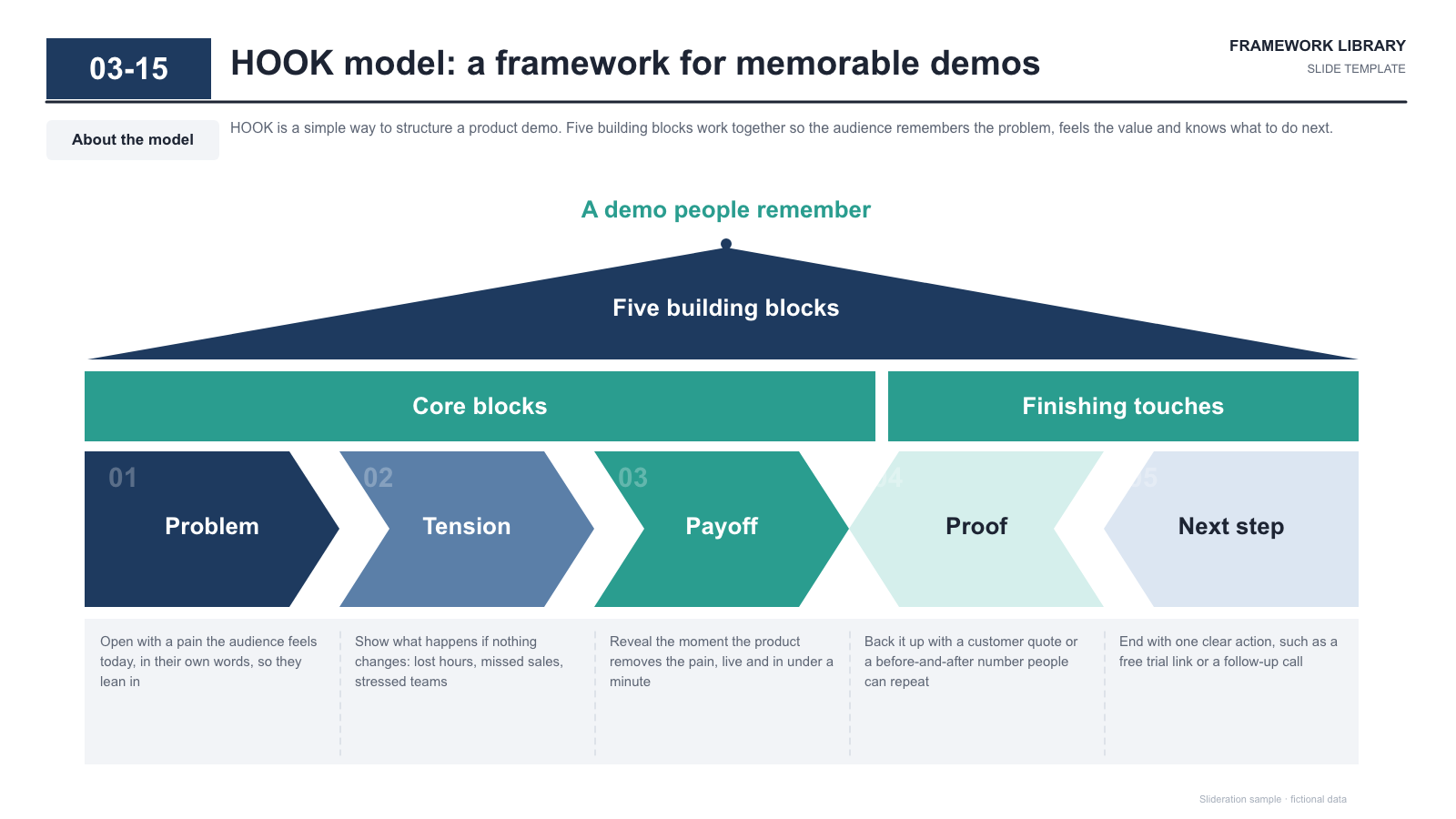
Roof triangle over two grouped bars, five chevrons (three right, two left) and description columns
Download PPTX · 1 creditSLIDE LAYOUT LIBRARY
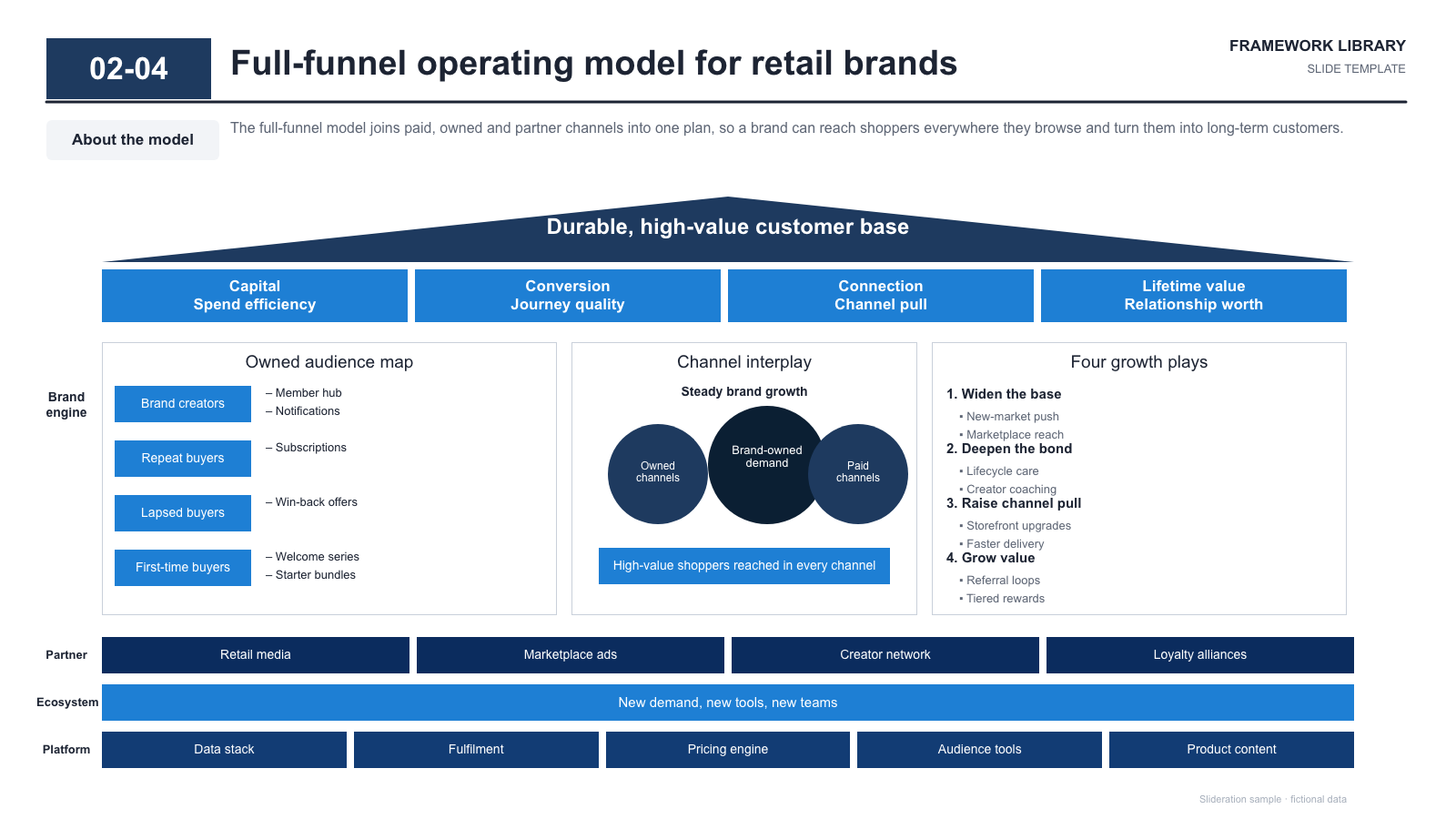
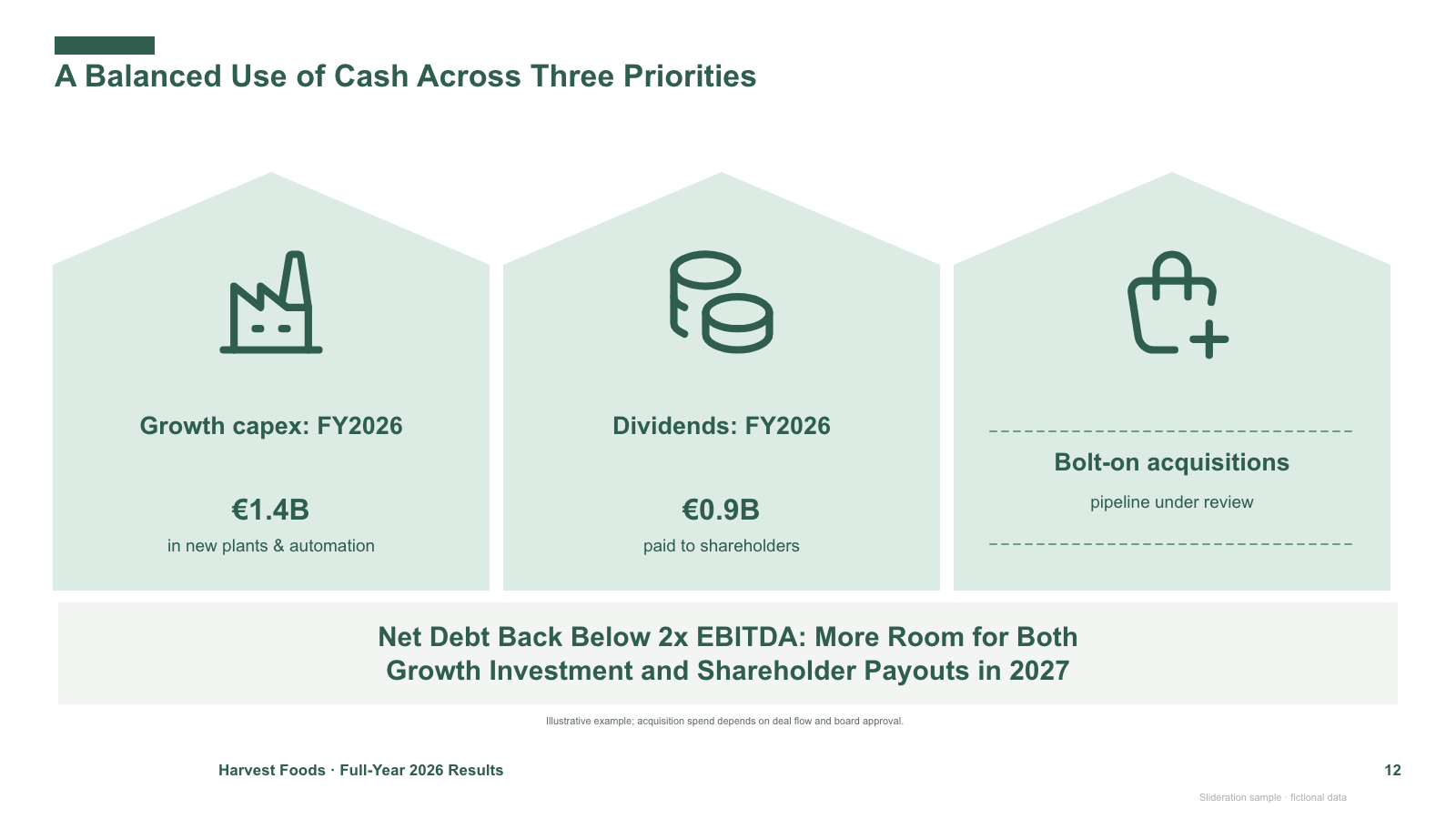
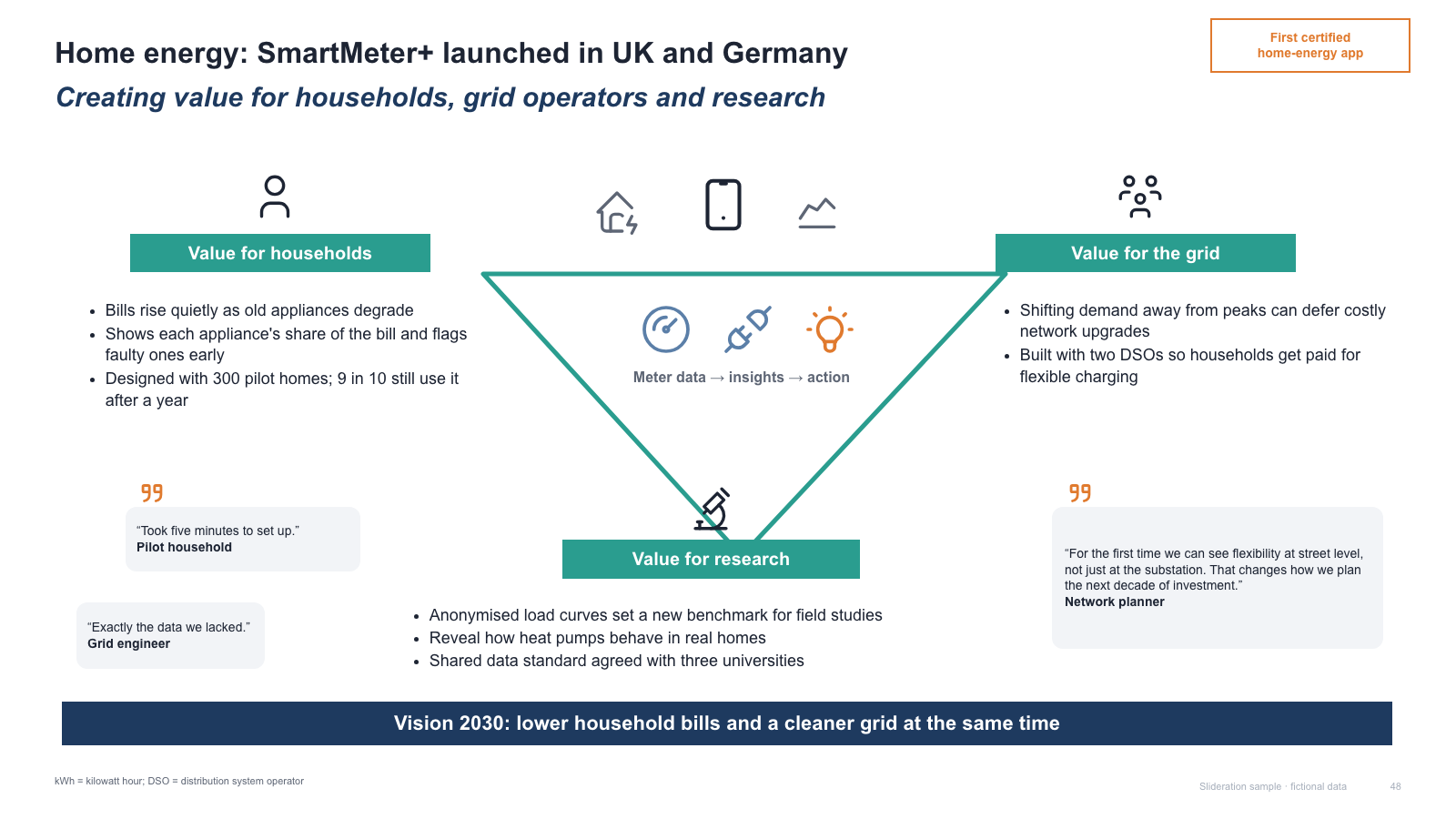
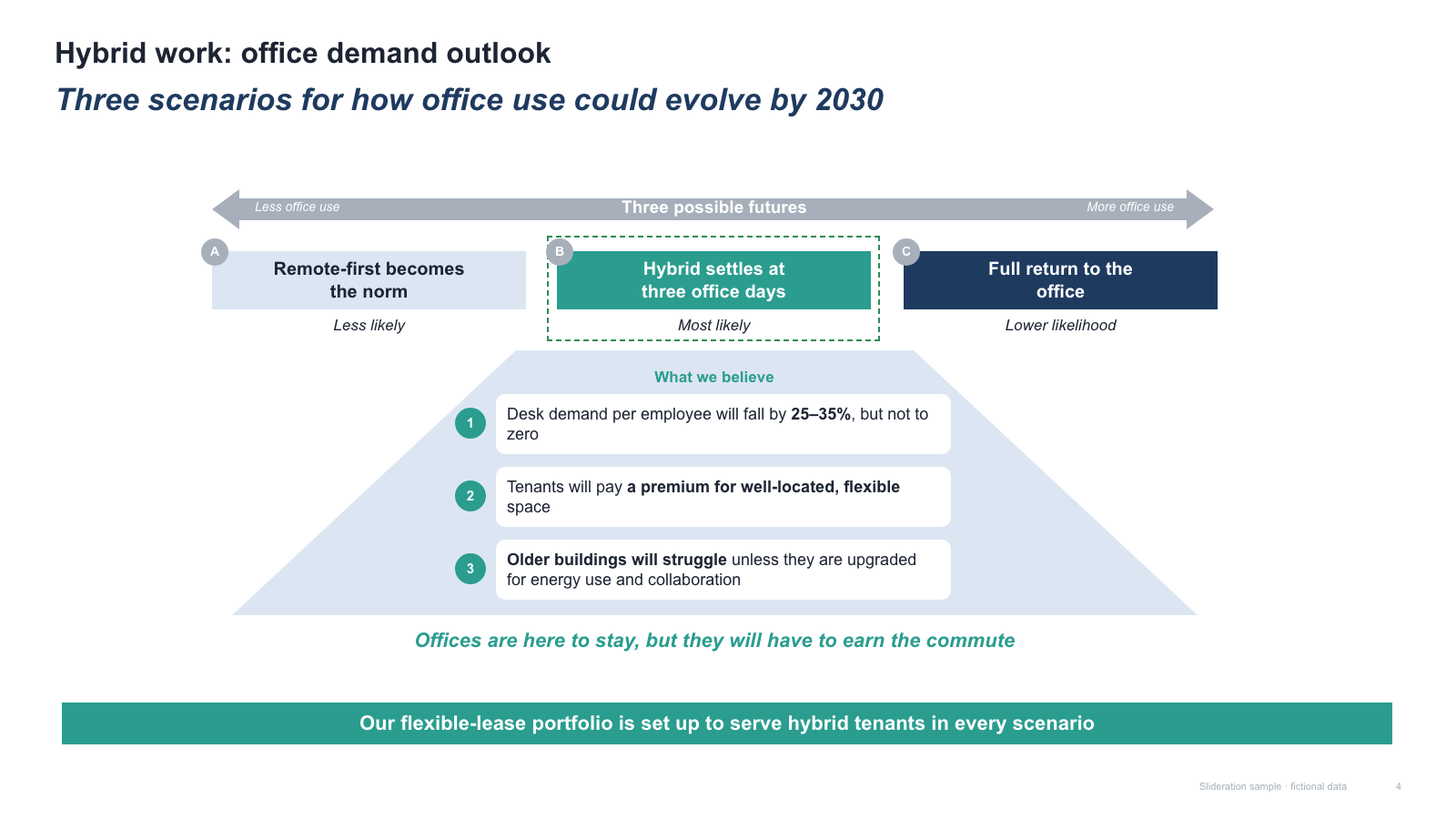
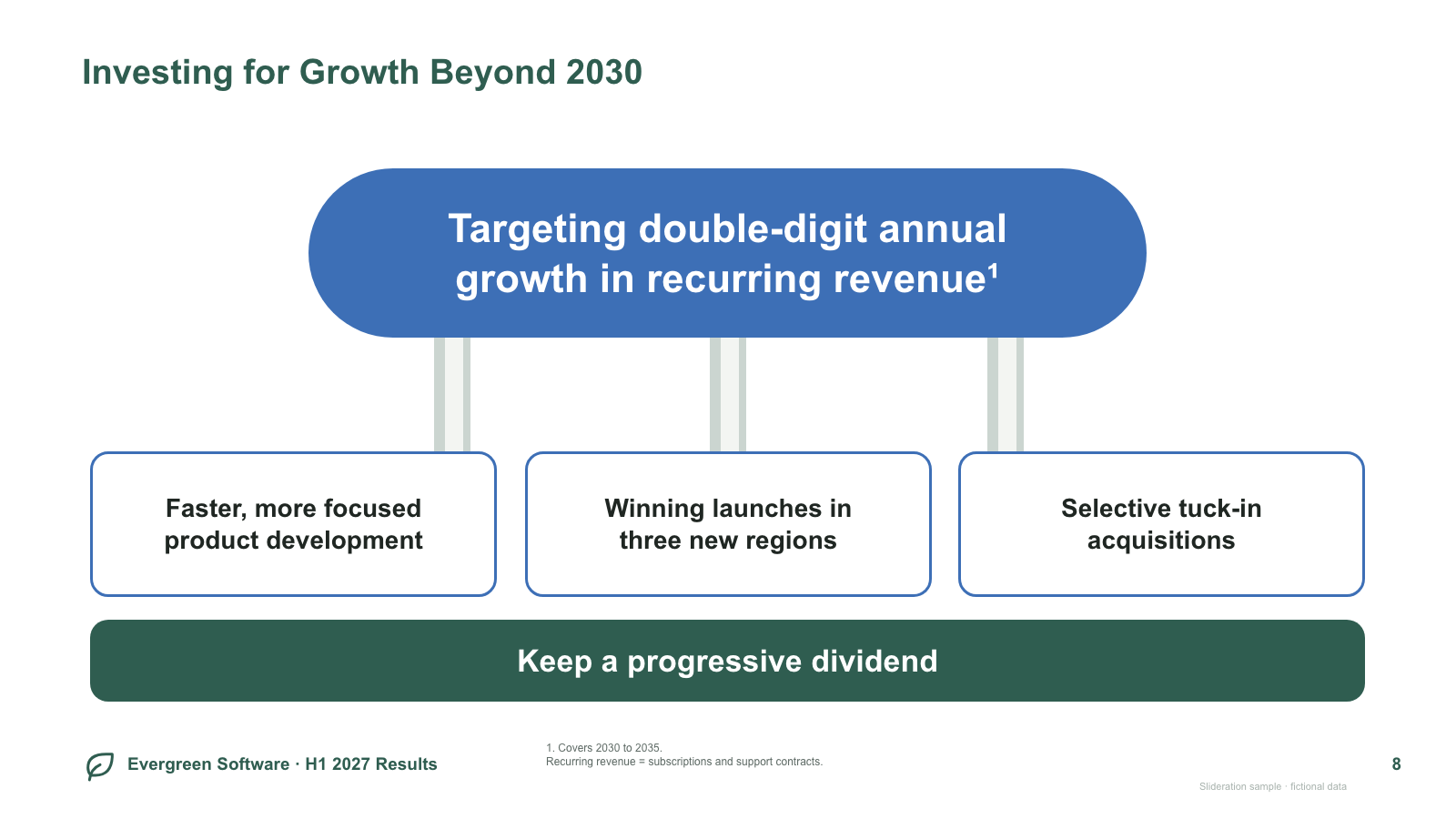
A pyramid claims a hierarchy: the levels below support the level above. A strategy house is the same claim drawn as a building — a goal in the roof, pillars holding it up, and enablers in the foundation. Both say this rests on that.
Browse 12 editable PPTX examplesor drop an image here
Search is free · searches the whole library, not just this page
No screenshot to hand?
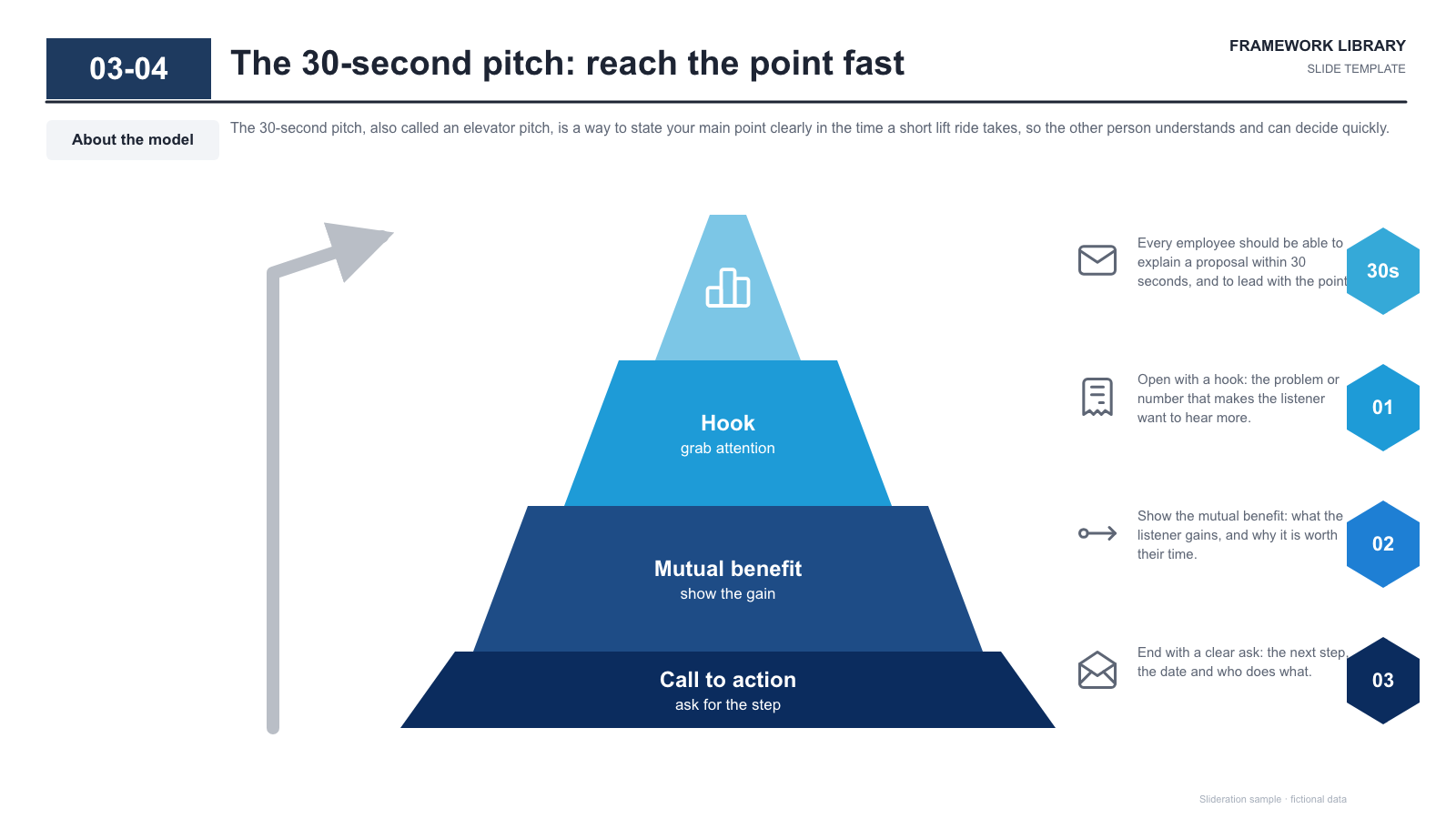
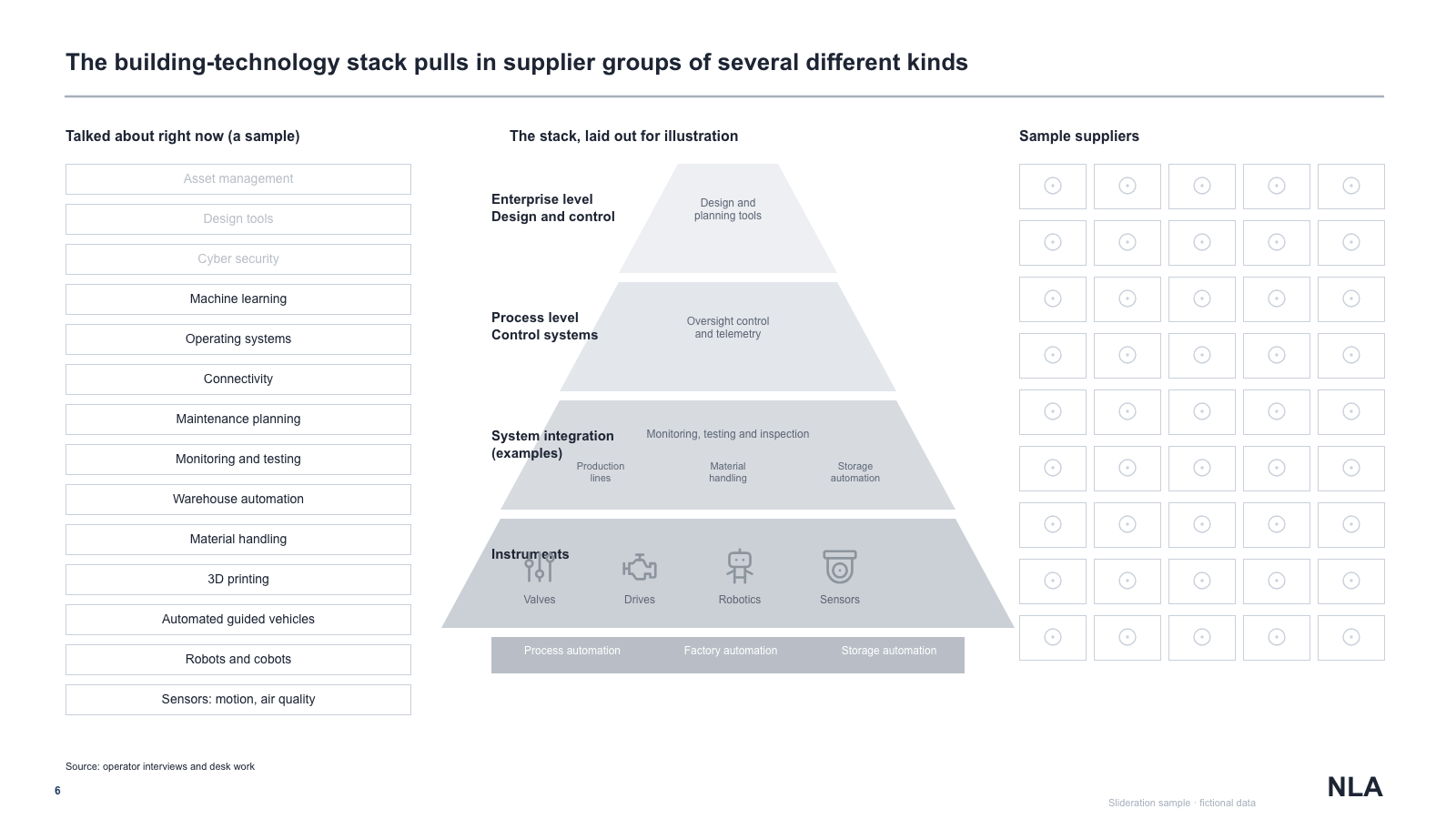
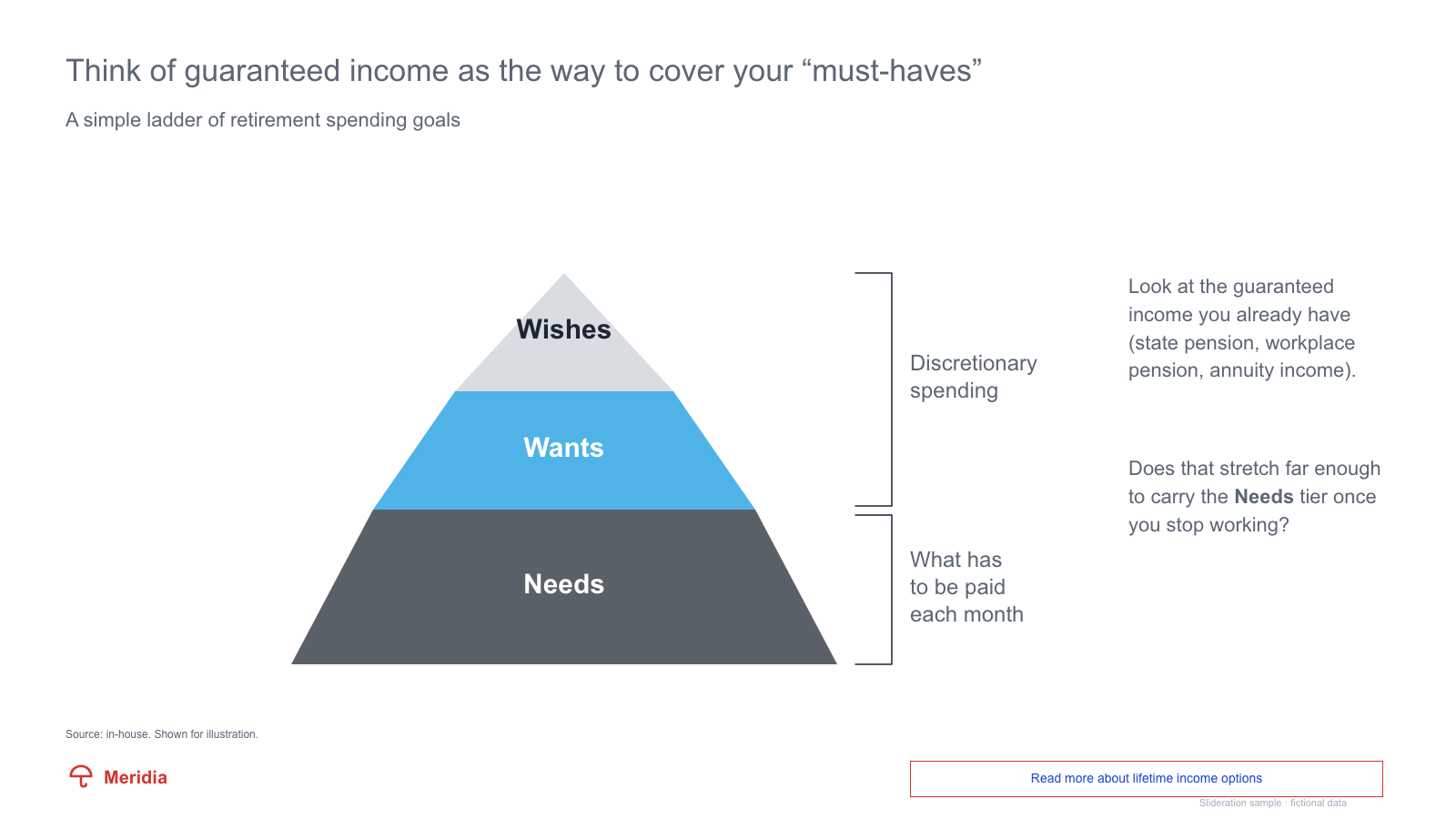
Use a pyramid when support runs in one direction. Vision resting on strategies resting on initiatives; a conclusion resting on findings resting on data. The reader should be able to point at any level and ask “what holds this up?” and find the answer directly below.
The strategy house variant is worth the extra structure when you have three things at once: one goal, a handful of parallel pillars, and a set of shared enablers that every pillar depends on. If you only have the pillars, use the pillars layout and skip the roof.
Beware the inverted case. If the levels are just categories of equal weight, the pyramid is decoration — the triangle is making a claim about support that the content does not back up.
Each one is redrawn from scratch with fictional sample data and comes as a native PowerPoint file — real shapes and text boxes you can edit, recolour and resize. Open an image for a full-size preview. Samples marked Free PPTX need no account; other downloads use 1 credit.
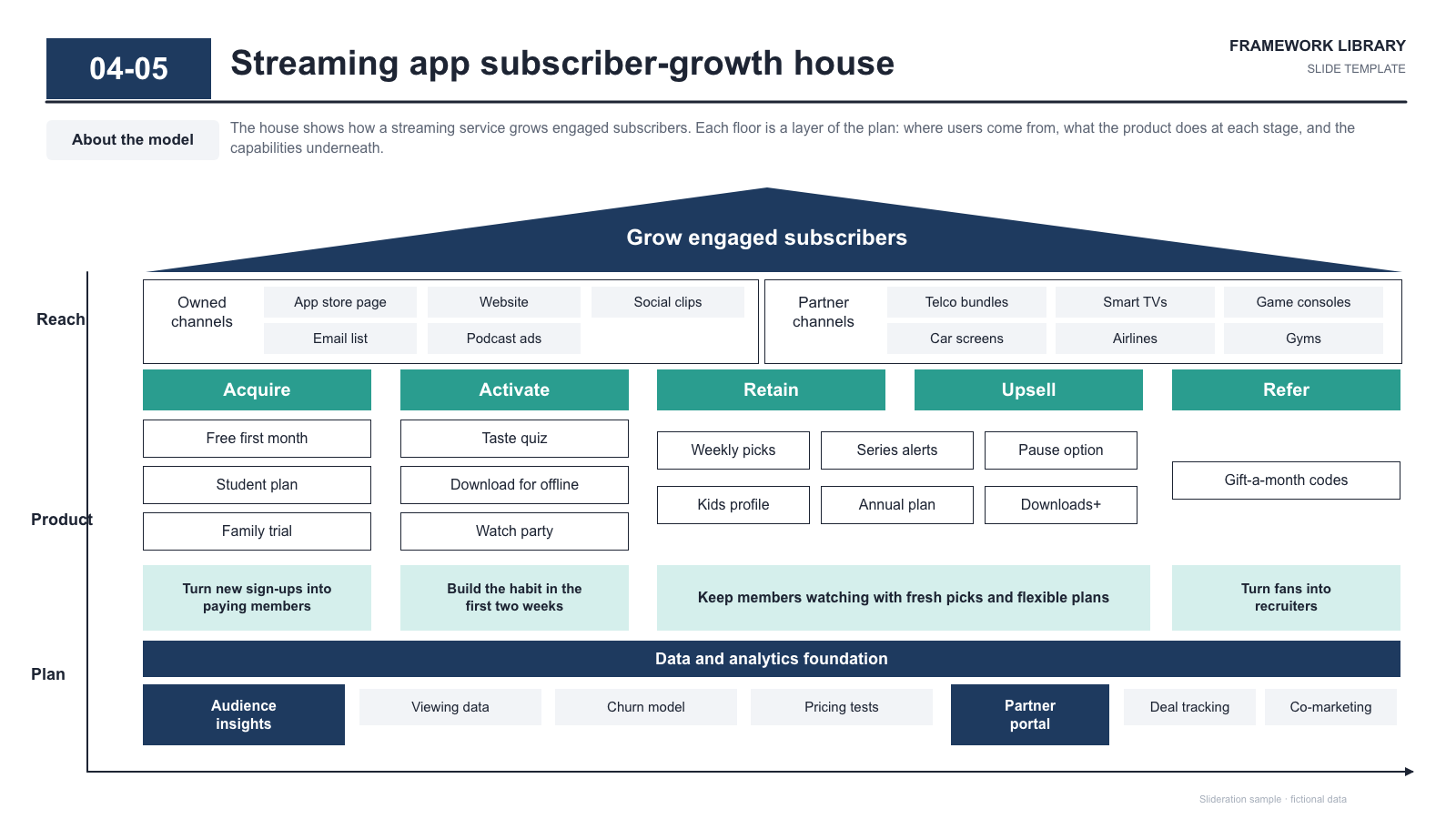
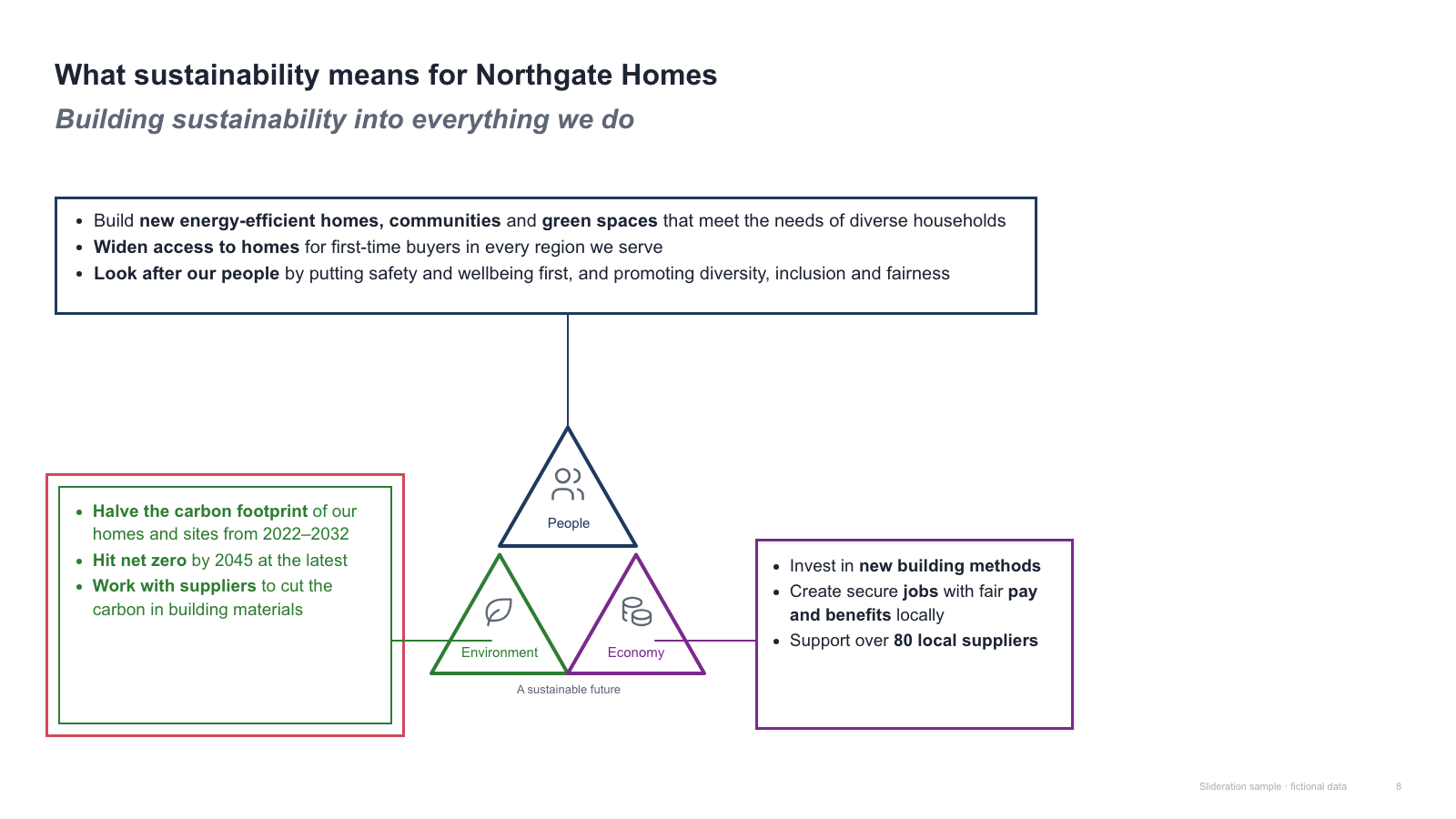
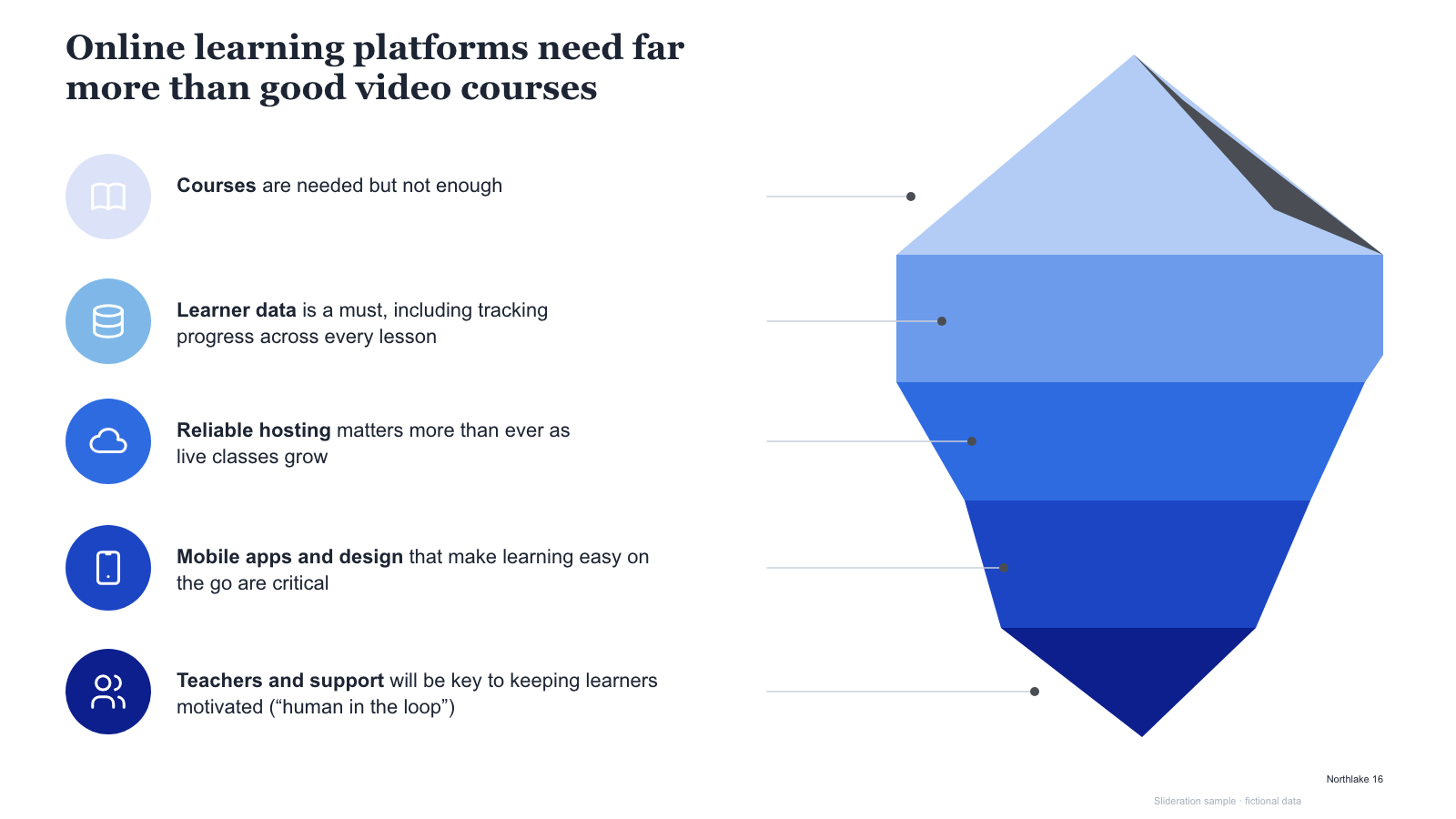
Matched by structure, not color. Download any layout as editable PowerPoint.
The library is small and growing. If nothing fits, try cropping to the part of the slide you care about.
Searching is free. 1 credit = 1 editable PPTX slide, and downloading the same slide again is free. New accounts get 2 free credits. Credits never expire.
One-time payments, no subscription. Prices in USD; taxes may apply at checkout. Payments are processed securely by our reseller and Merchant of Record, Creem. See the refund policy.
A framework drawn as a building: one goal in the roof, three to five strategic pillars as columns, and shared enablers in the foundation. It is used when a strategy has both parallel thrusts and common prerequisites.
When the items support each other in one direction. If you can point at a level and name what holds it up, a pyramid adds information. If the levels are just groupings, a list is more honest and easier to read.
Three to five. Two rarely needs a house; six or more and the columns get too narrow to label, which usually means some of them are sub-pillars.
The Pyramid Principle is Barbara Minto's method for structuring an argument — conclusion first, then supporting reasons, then evidence. A pyramid slide is one way to draw that structure, but the principle applies to every slide in a deck, including ones with no triangle on them.