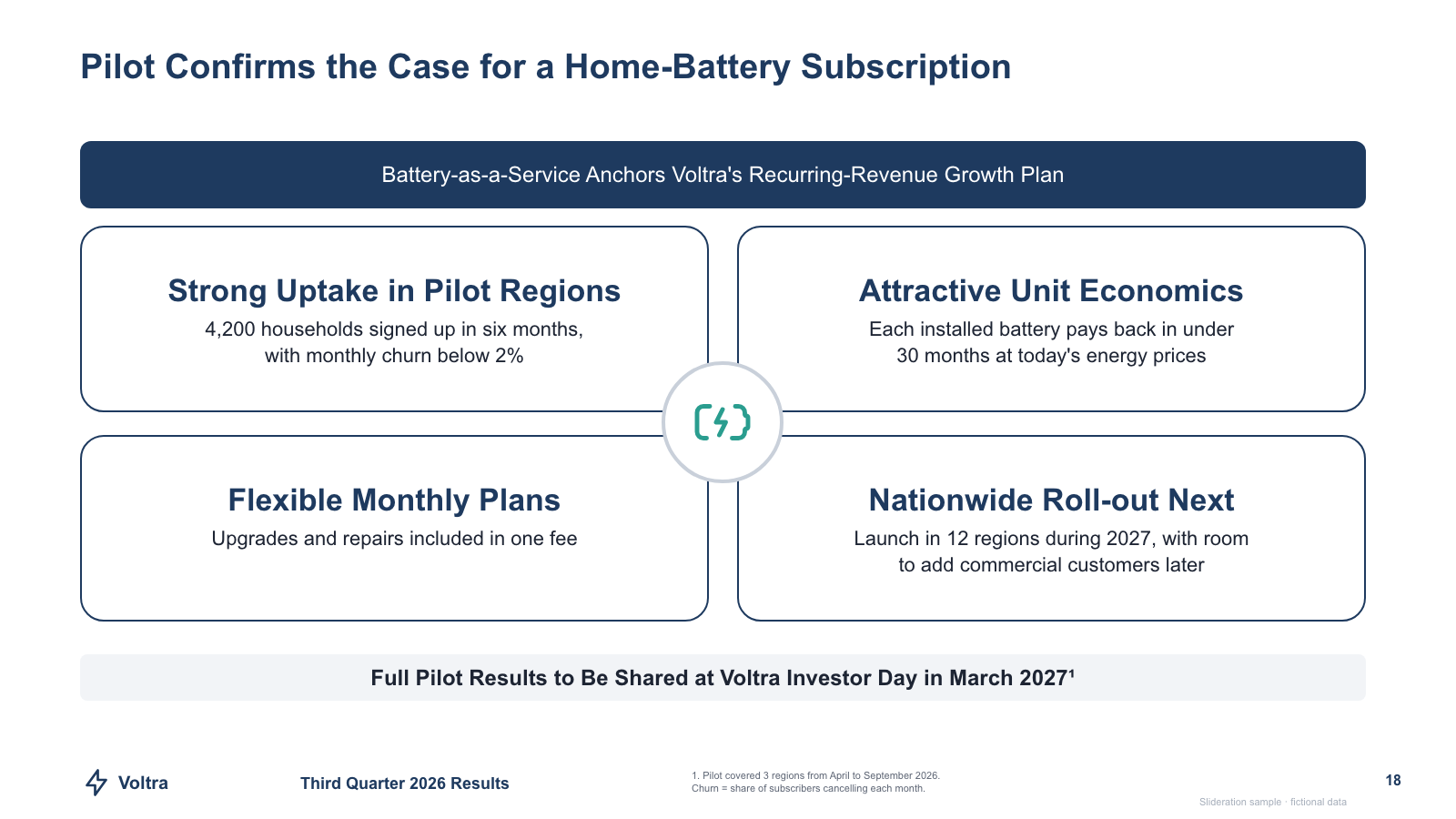
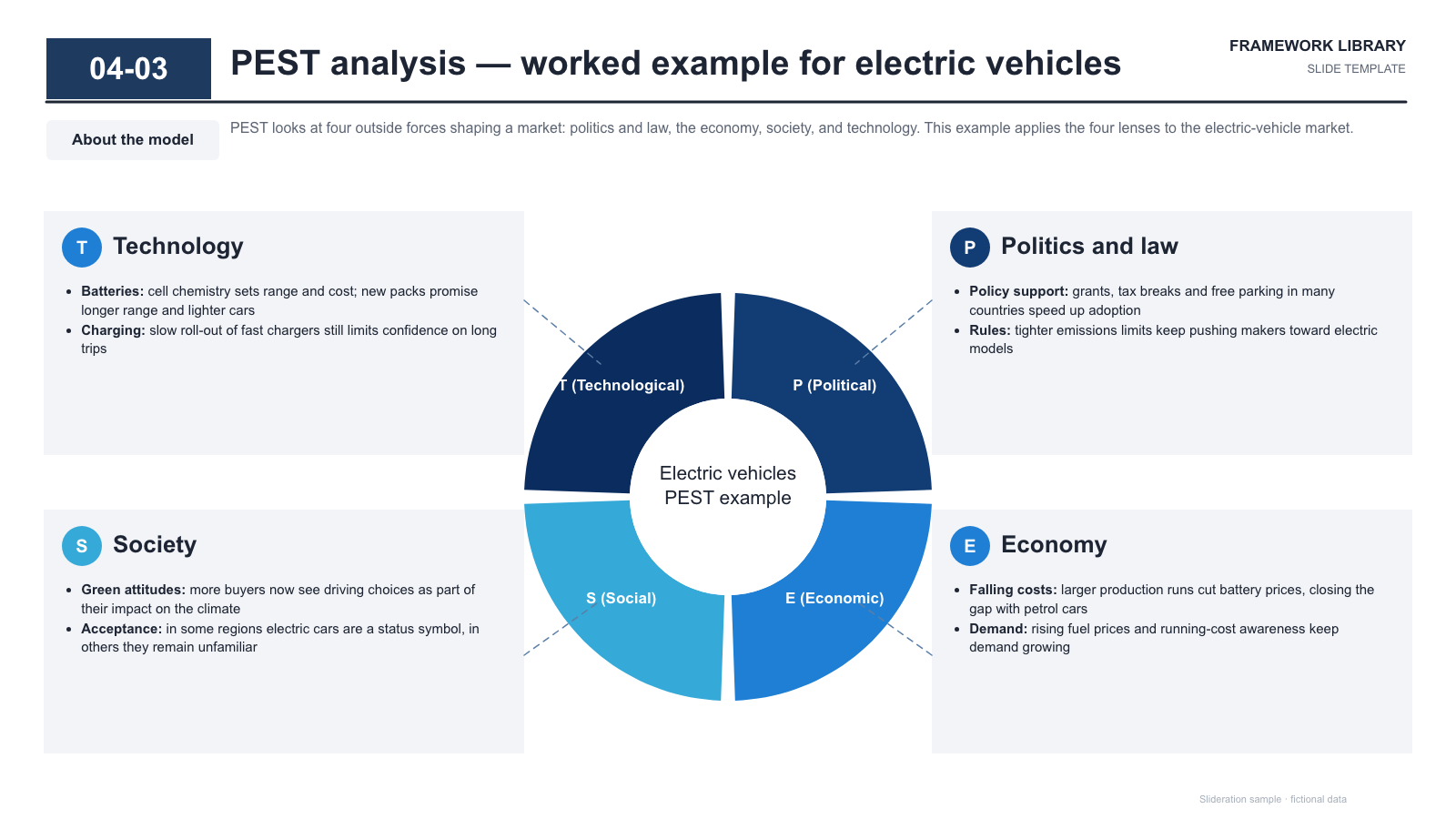
Banner over a 2x2 grid of rounded message boxes joined by a central badge, with a closing bar
Download PPTX · 1 creditSLIDE LAYOUT LIBRARY
A 2x2 matrix claims that two variables explain most of what matters, and that the interesting thing is which combination you are in. It is the most recognisable consulting shape and the most frequently misused.
Browse 10 editable PPTX examplesor drop an image here
Search is free · searches the whole library, not just this page
No screenshot to hand?
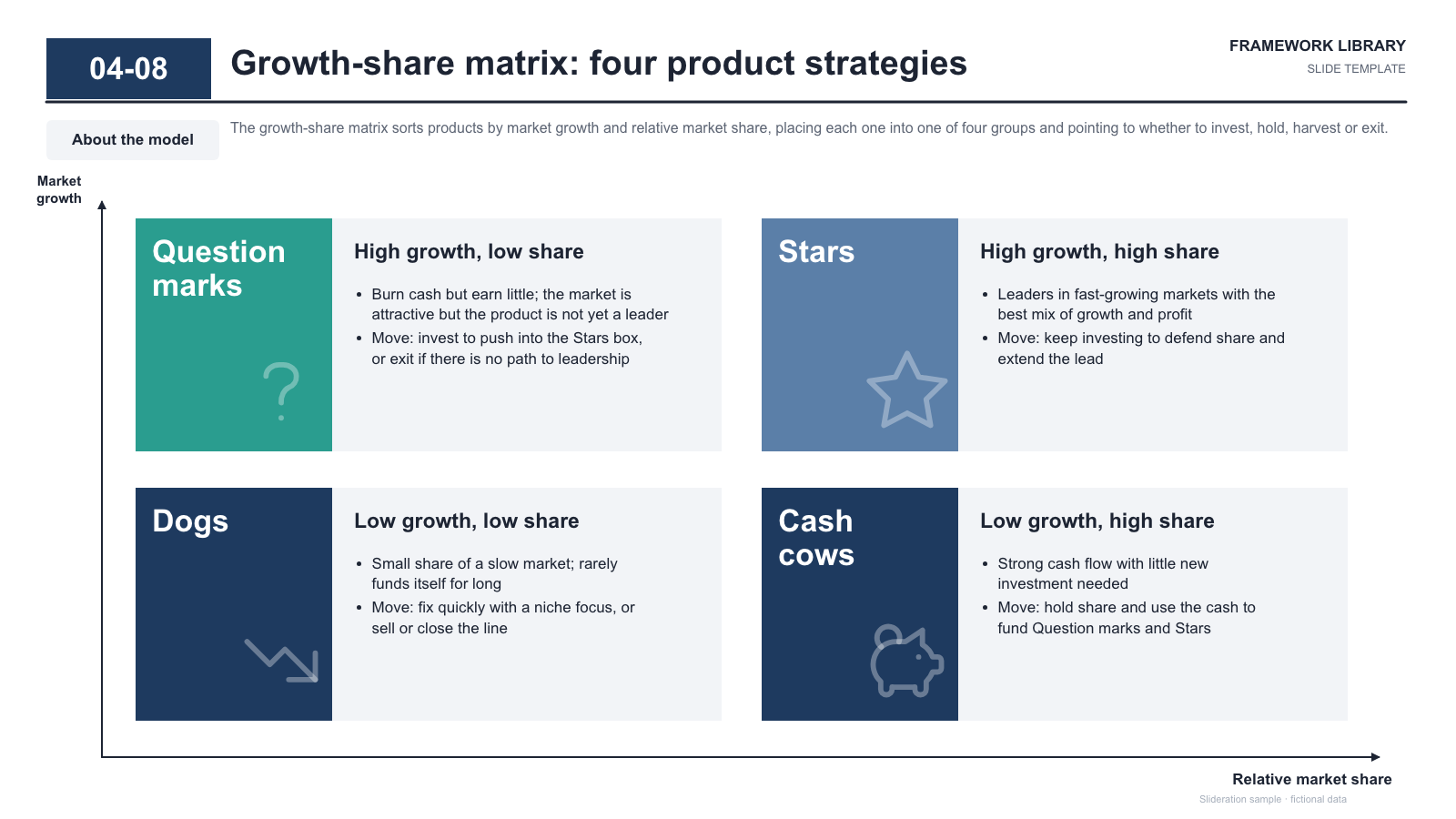
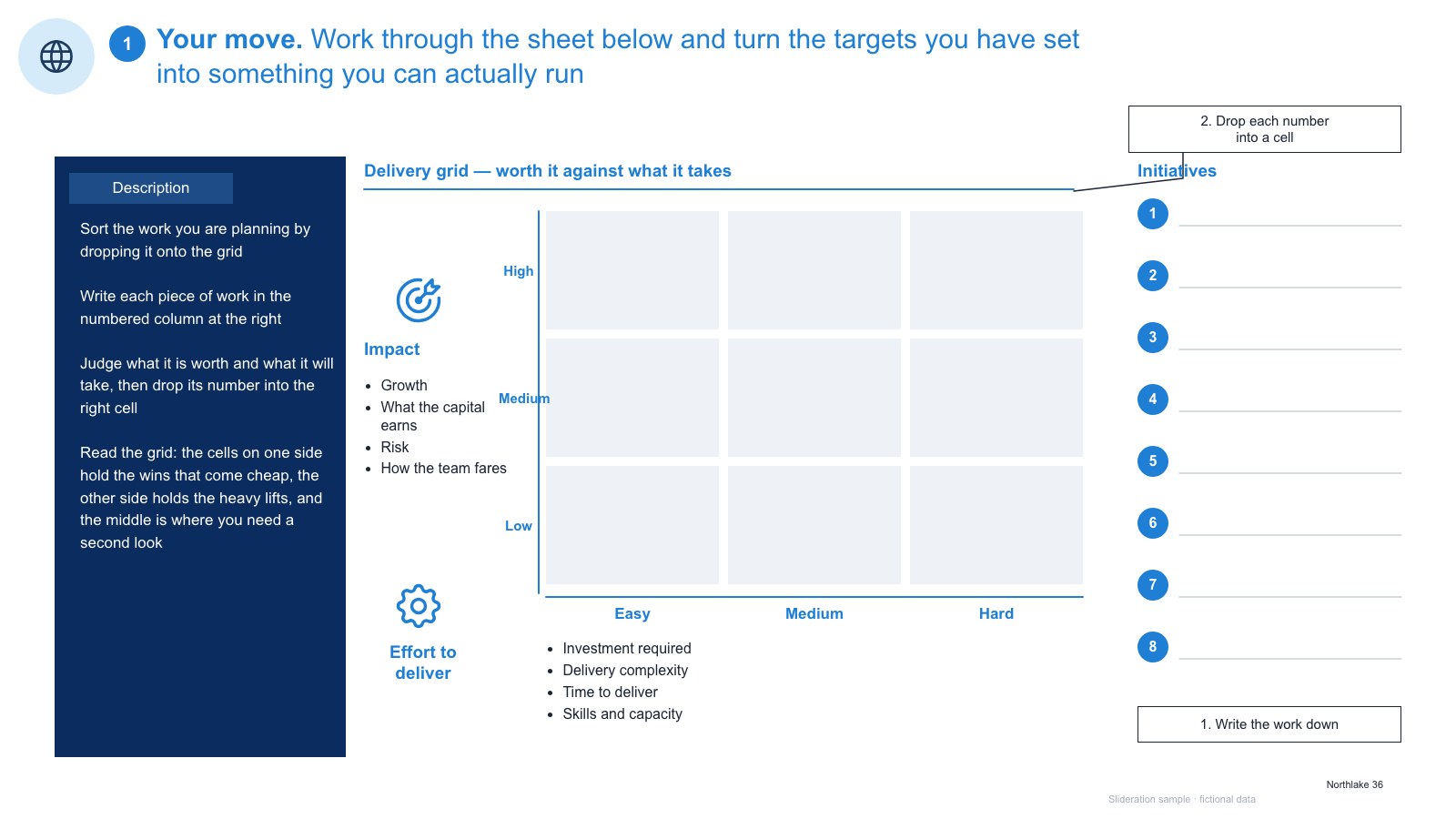
Use a matrix when a decision genuinely turns on two independent dimensions and the recommended action differs by quadrant. Prioritising initiatives by impact and effort is the honest everyday case; portfolio positions by growth and share is the classic one.
The axes have to be independent. If high on one nearly always means high on the other, the items fall along a diagonal, two quadrants sit empty, and you have drawn a ranked list with extra ink.
Each quadrant needs a different answer. “Do these now, schedule these, delegate these, drop these” is a matrix worth drawing. If three quadrants share the same recommendation, the second axis is not earning its keep.
Each one is redrawn from scratch with fictional sample data and comes as a native PowerPoint file — real shapes and text boxes you can edit, recolour and resize. Open an image for a full-size preview. Samples marked Free PPTX need no account; other downloads use 1 credit.


Matched by structure, not color. Download any layout as editable PowerPoint.
The library is small and growing. If nothing fits, try cropping to the part of the slide you care about.
Searching is free. 1 credit = 1 editable PPTX slide, and downloading the same slide again is free. New accounts get 2 free credits. Credits never expire.
One-time payments, no subscription. Prices in USD; taxes may apply at checkout. Payments are processed securely by our reseller and Merchant of Record, Creem. See the refund policy.
When the two axes are correlated, when every quadrant implies the same action, or when you have no items to place. In all three cases the matrix looks analytical while saying less than a sorted list would.
Pick the two variables that most change the recommended action, and check they are independent. A useful test: name a thing that is high on one axis and low on the other. If you cannot, the axes are measuring the same thing.
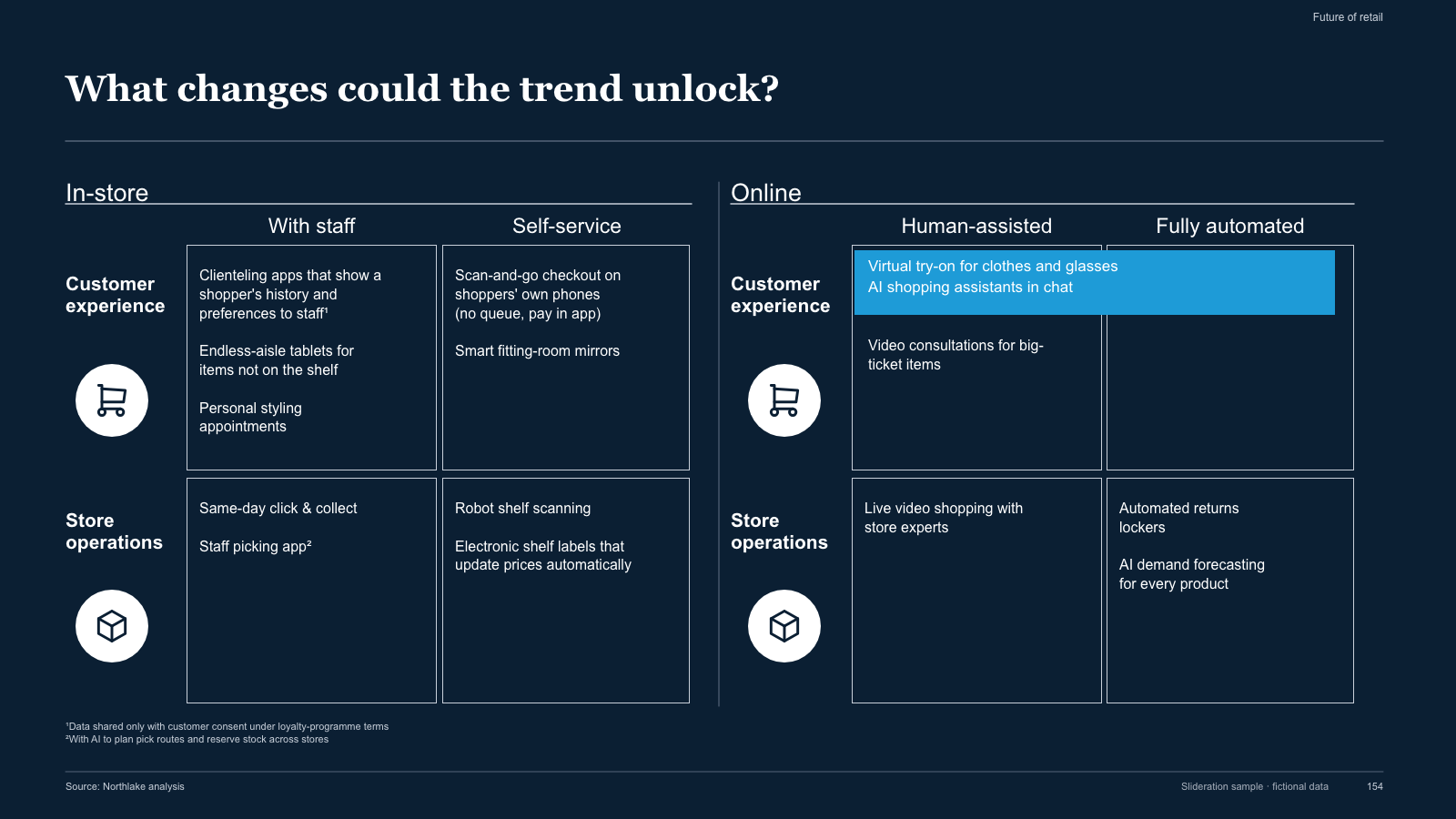
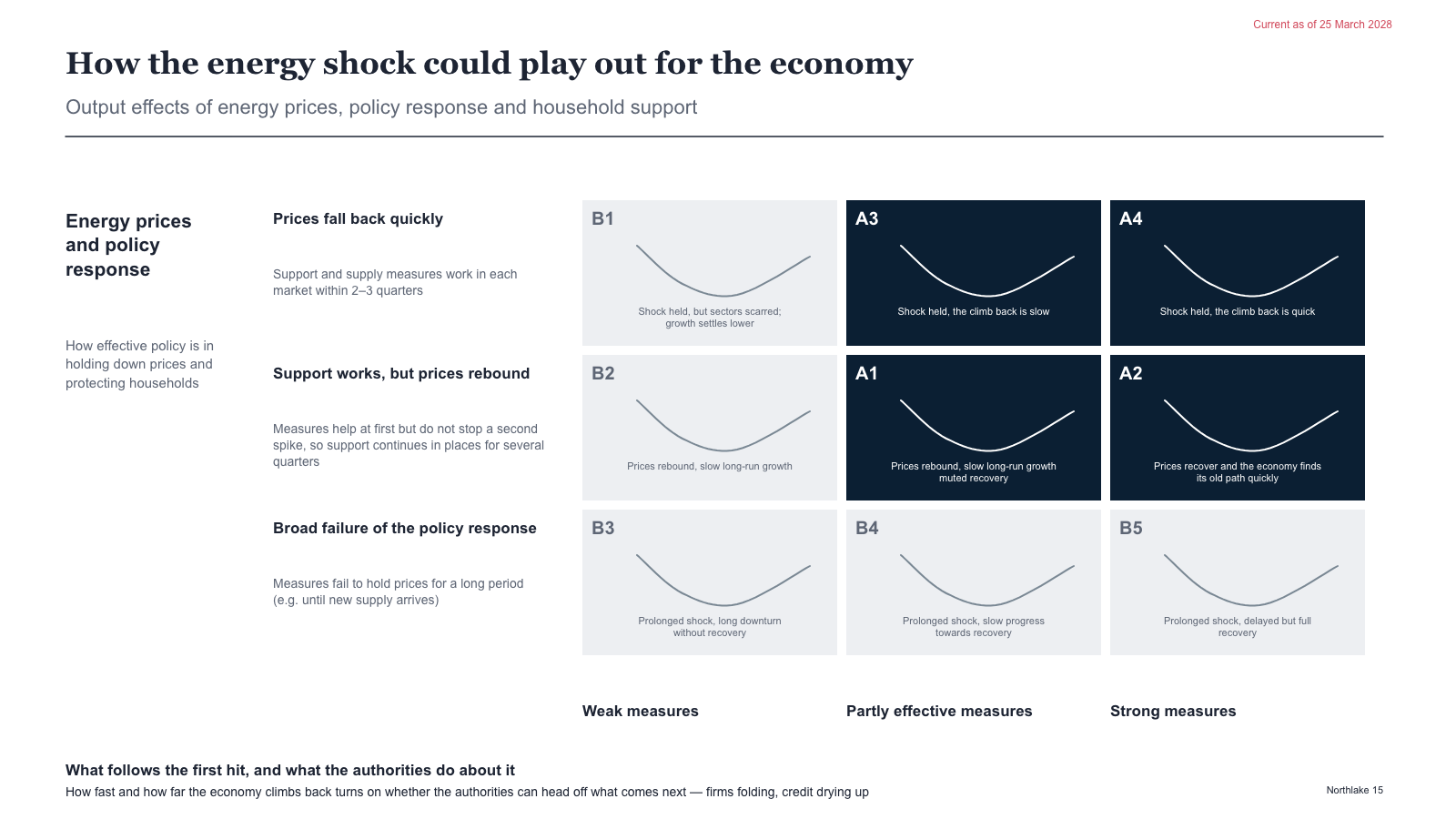
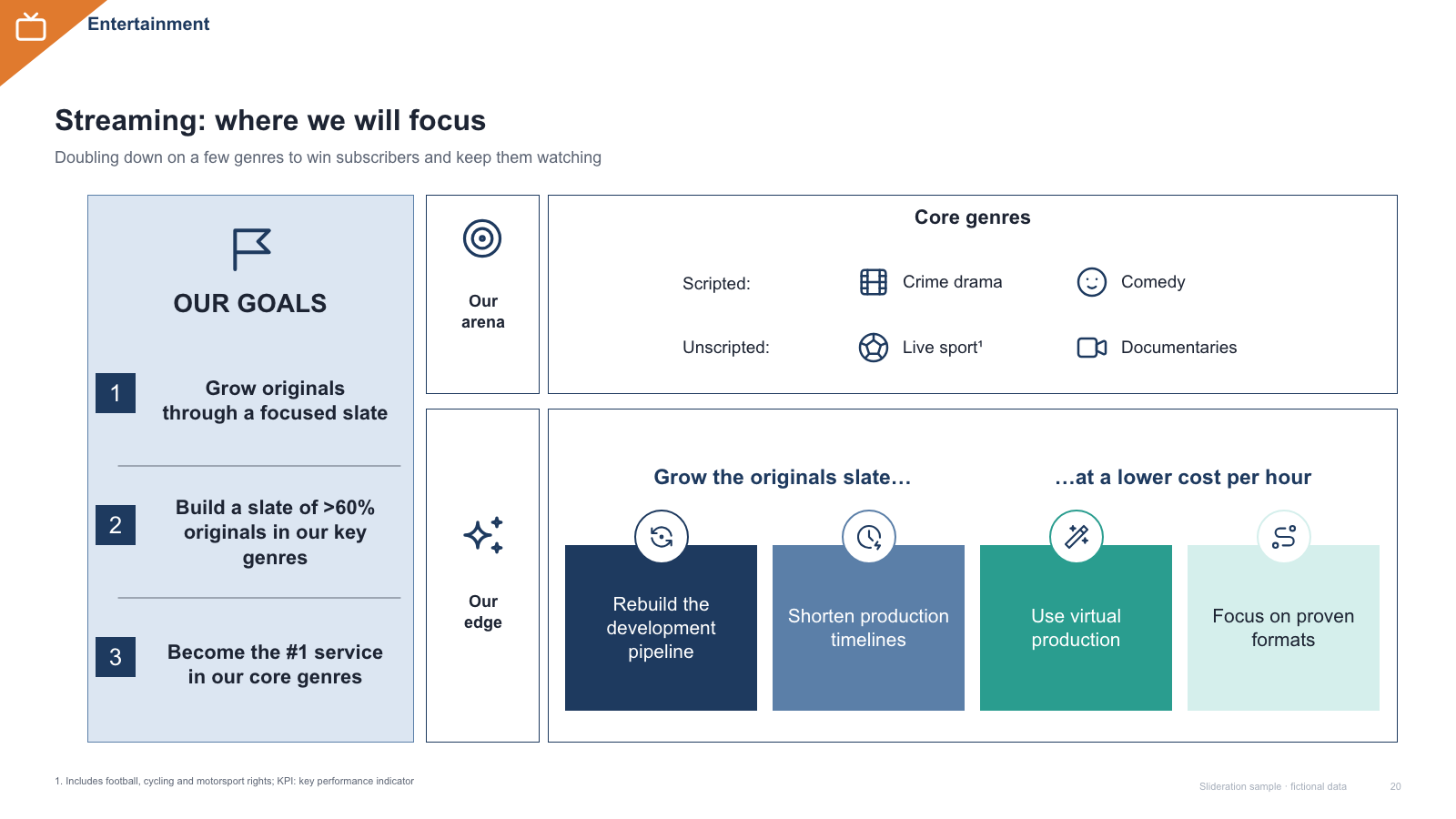
Axes. A matrix positions items along two measured dimensions, so position carries meaning. A four-box grid is four parallel cards arranged in a square; position is just layout. Both appear on this page, labelled for what they are.
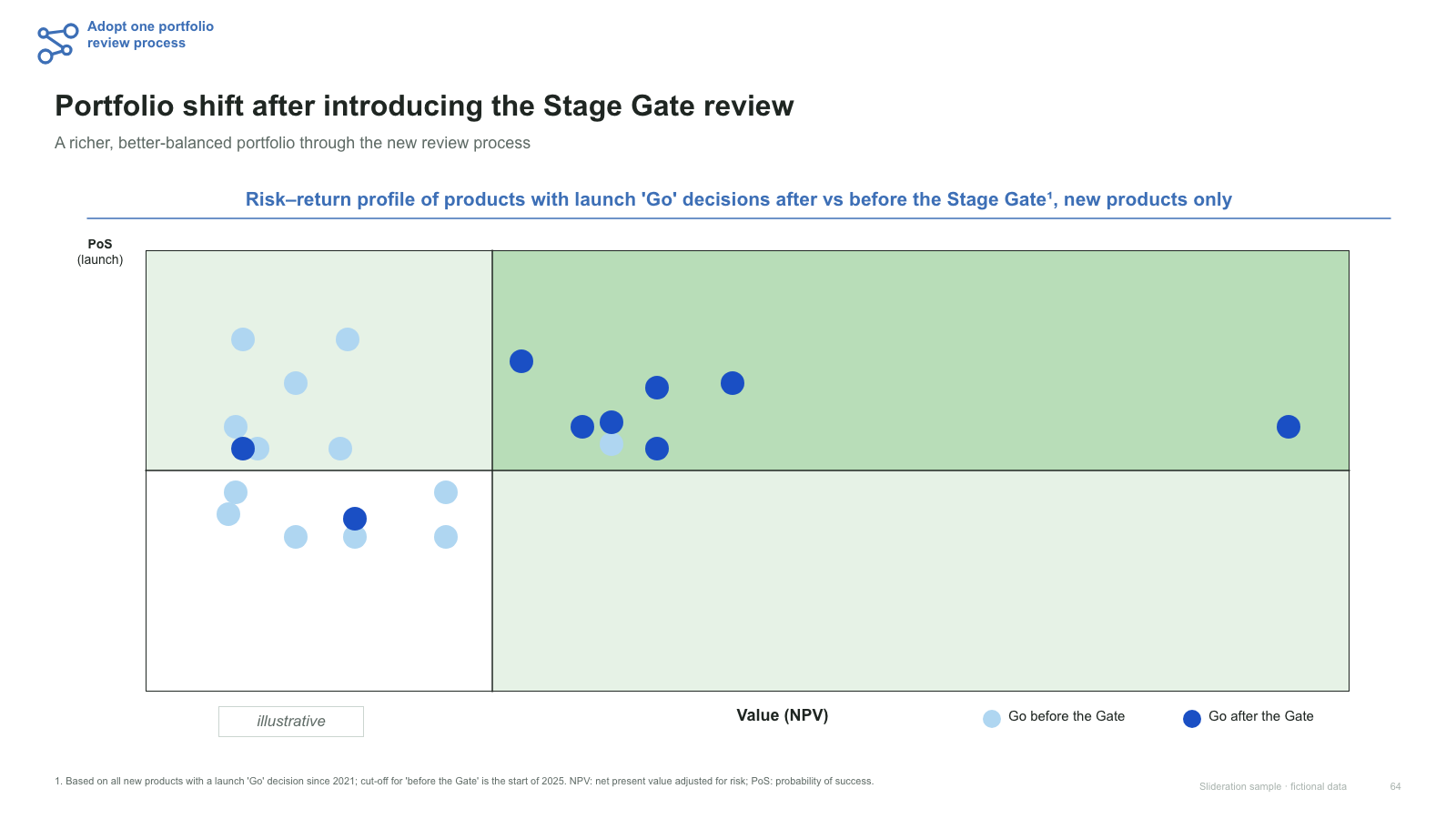
If you have them, yes — a matrix with placed items is an argument, while an empty matrix is a framework. If you only have judgement rather than data, say so in a footnote and keep the placements relative rather than precise.