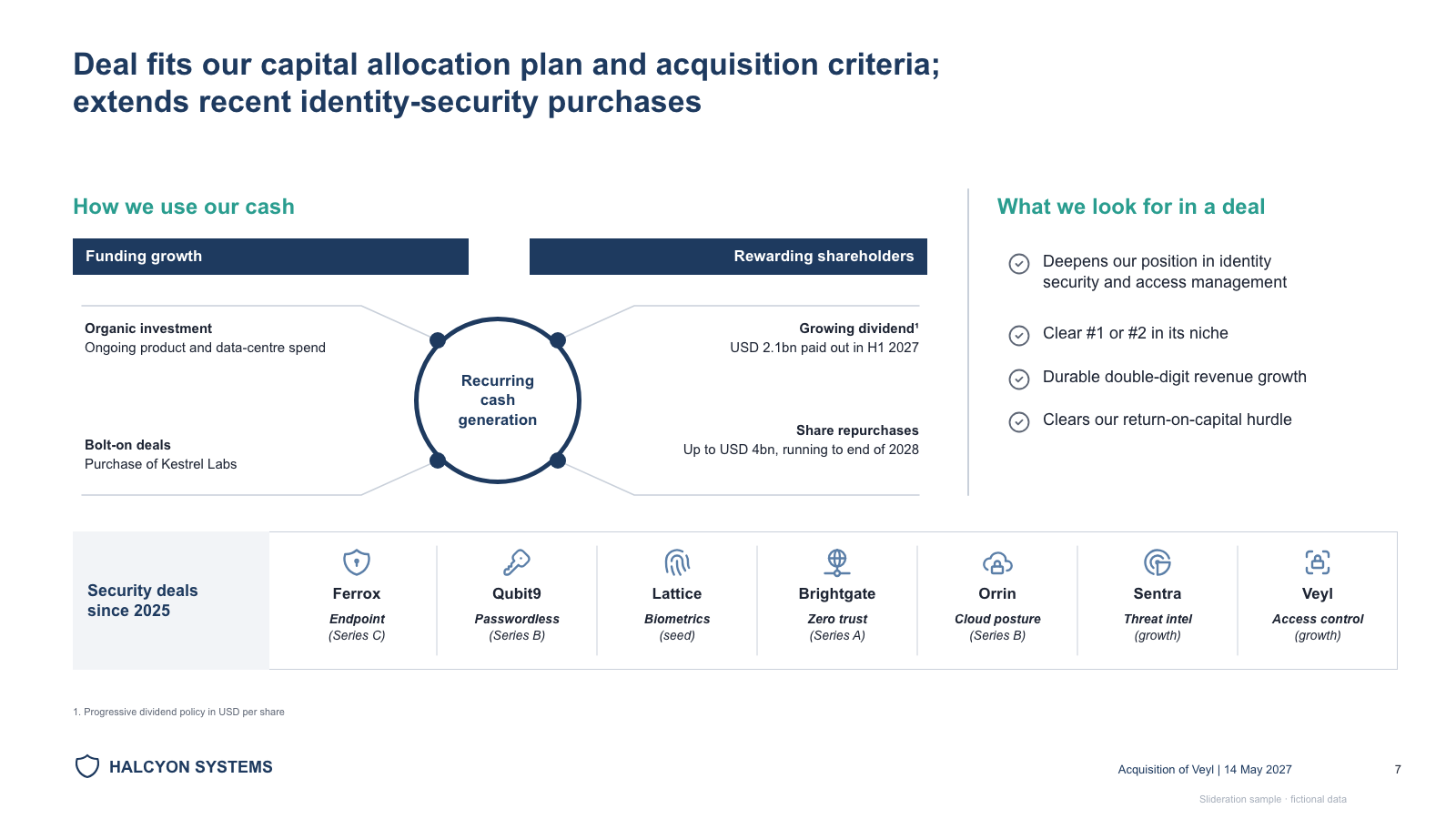
Capital-allocation hub
Capital-allocation hub with four connected notes, criteria checklist and a deal strip
1 slides · 1 credit
Check inputs & editing effort →Where are the programs or resources?
Bring: An item register, common stage or classification rules, current status and reporting date.
Fit check: Do not interpret a stage position as probability of success. Add definitions before comparing qualitative scores.
16 editable templates. Open a template to check its structure and editing requirements.
Capital-allocation hub with four connected notes, criteria checklist and a deal strip
1 slides · 1 credit
Check inputs & editing effort →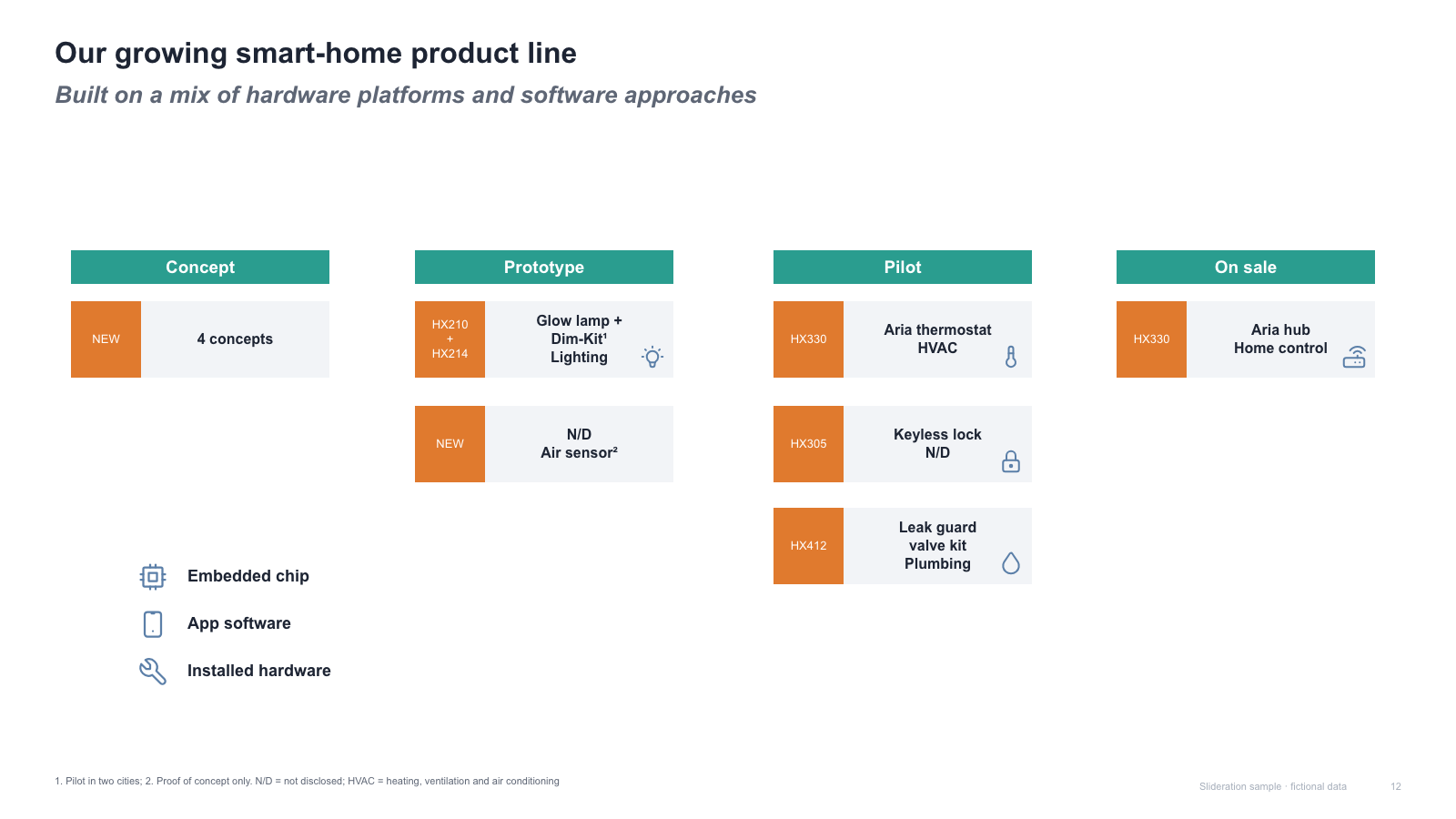
Four-stage pipeline columns with coded item cards and a small legend
1 slides · 1 credit
Check inputs & editing effort →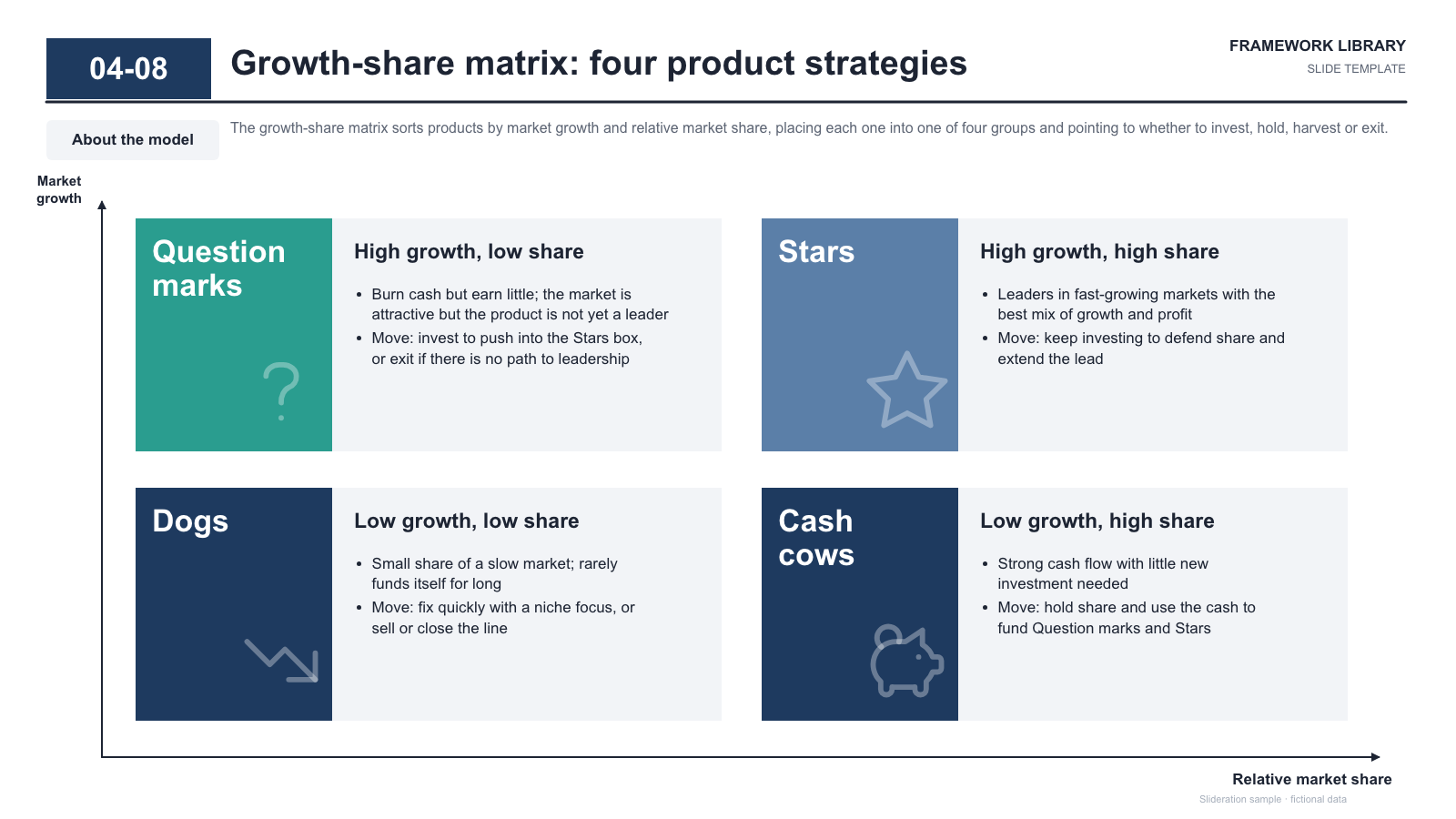
Growth-share 2x2 matrix — coloured label tiles with watermark icons and strategy panels on axes
1 slides · 1 credit
Check inputs & editing effort →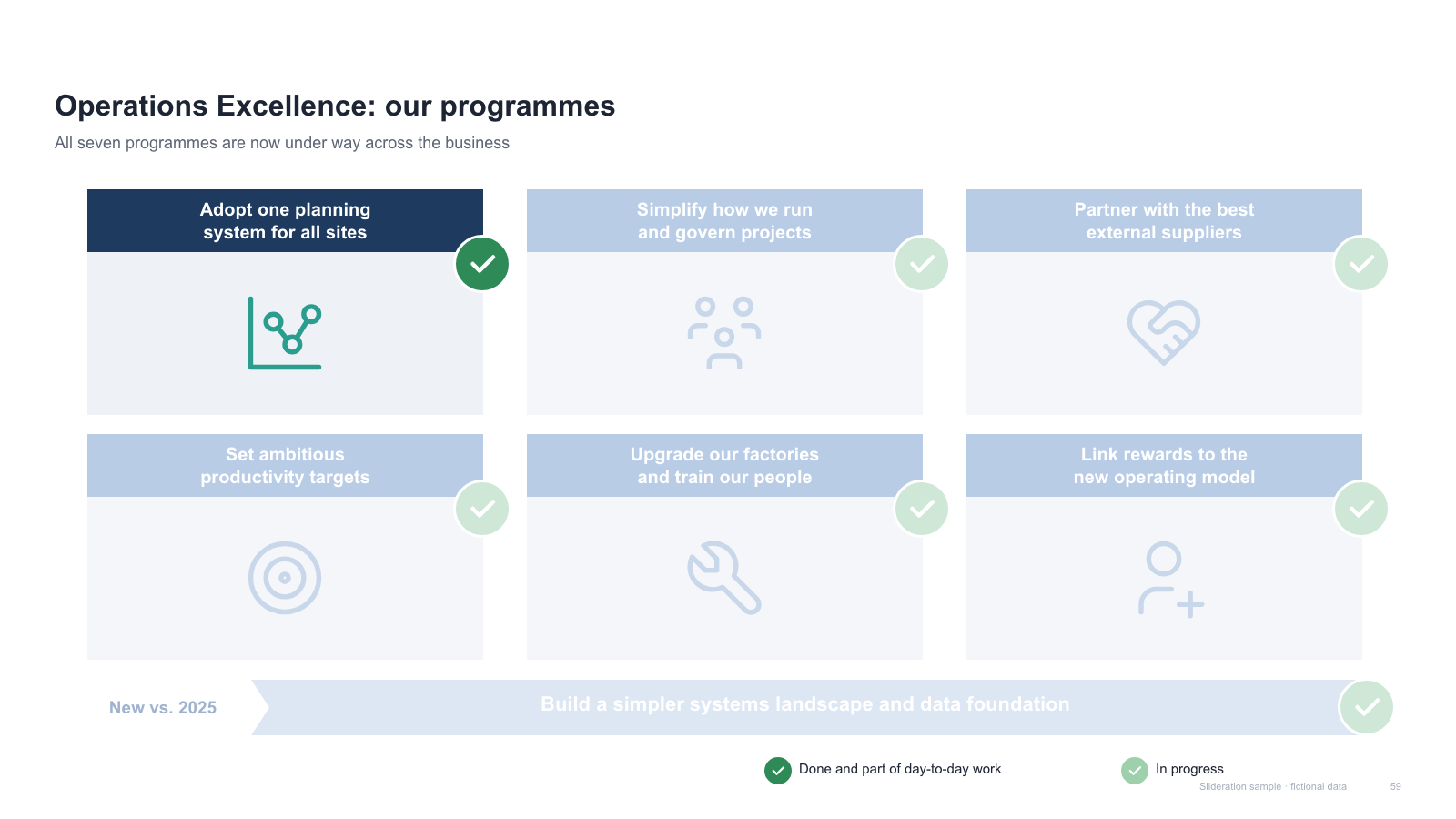
3x2 programme card grid with one highlighted card, check badges, faded cards and a bottom bar
1 slides · 1 credit
Check inputs & editing effort →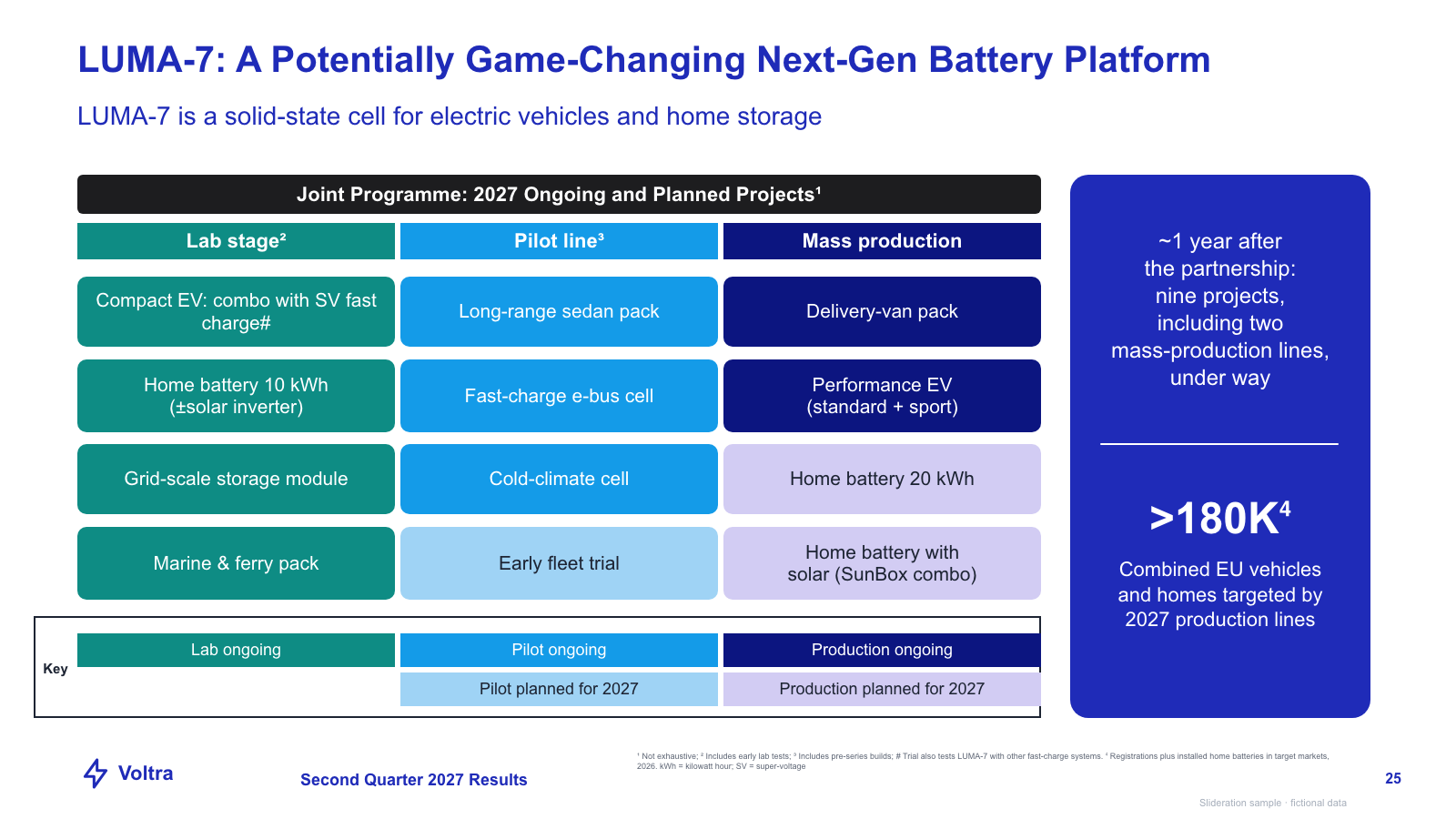
Programme matrix — dark title bar, three phase columns of coloured study cells, legend and stat panel
1 slides · 1 credit
Check inputs & editing effort →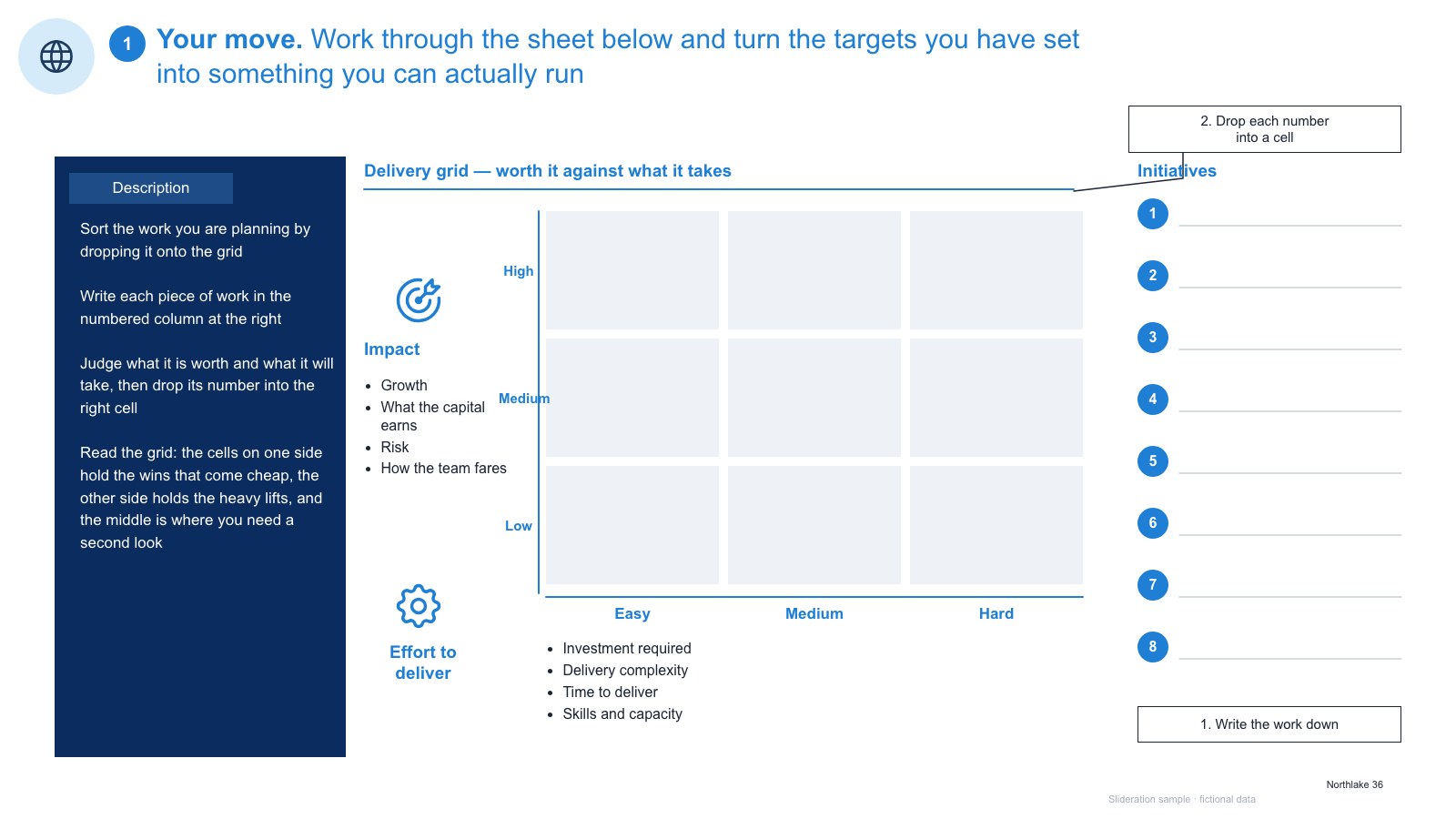
Worksheet template — instruction panel, empty 3x3 impact/effort matrix and a numbered initiative list
1 slides · 1 credit
Check inputs & editing effort →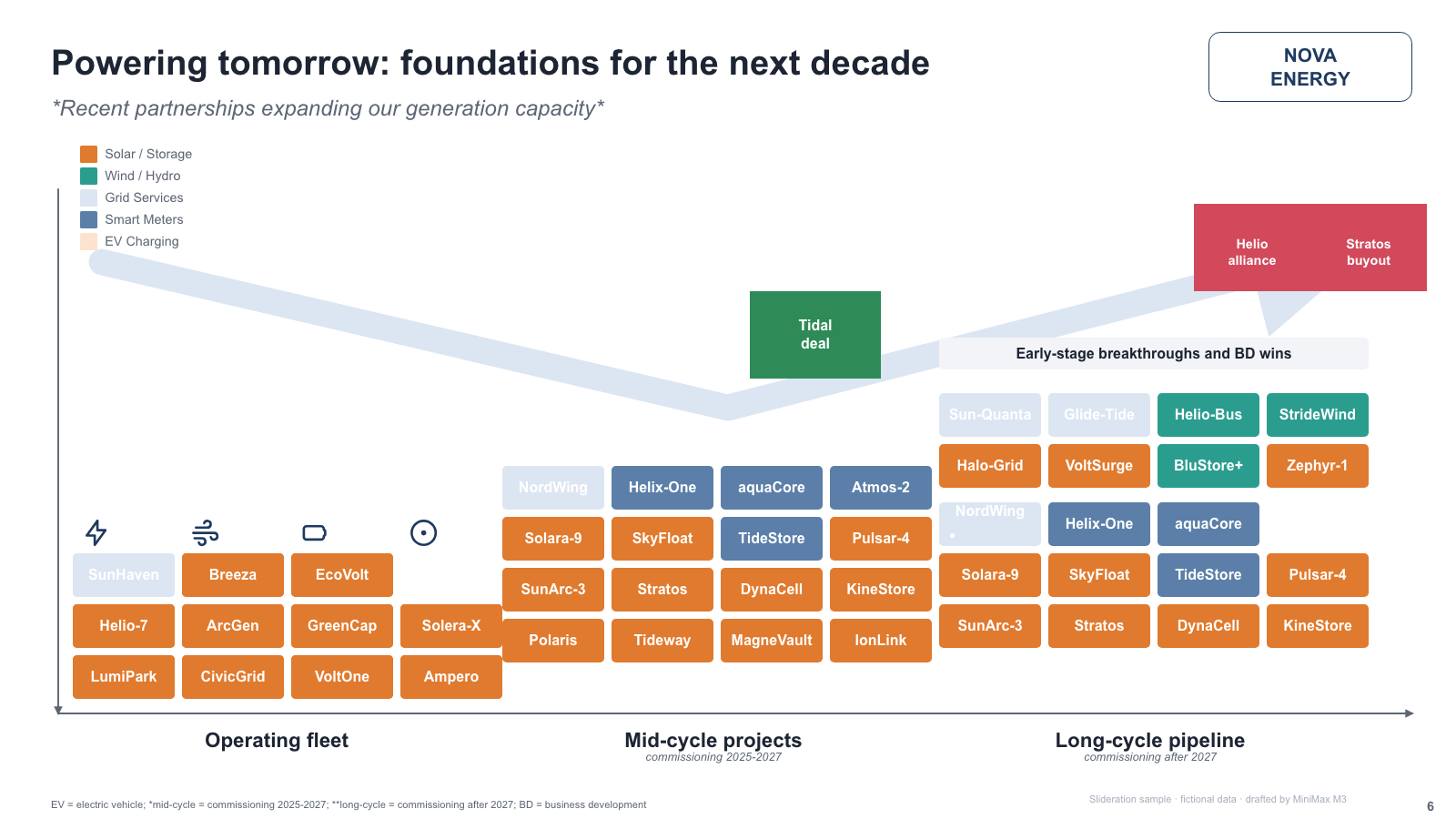
Three-column staggered portfolio grid with rising trend arrow and labeled acquisition callouts
1 slides · 1 credit
Check inputs & editing effort →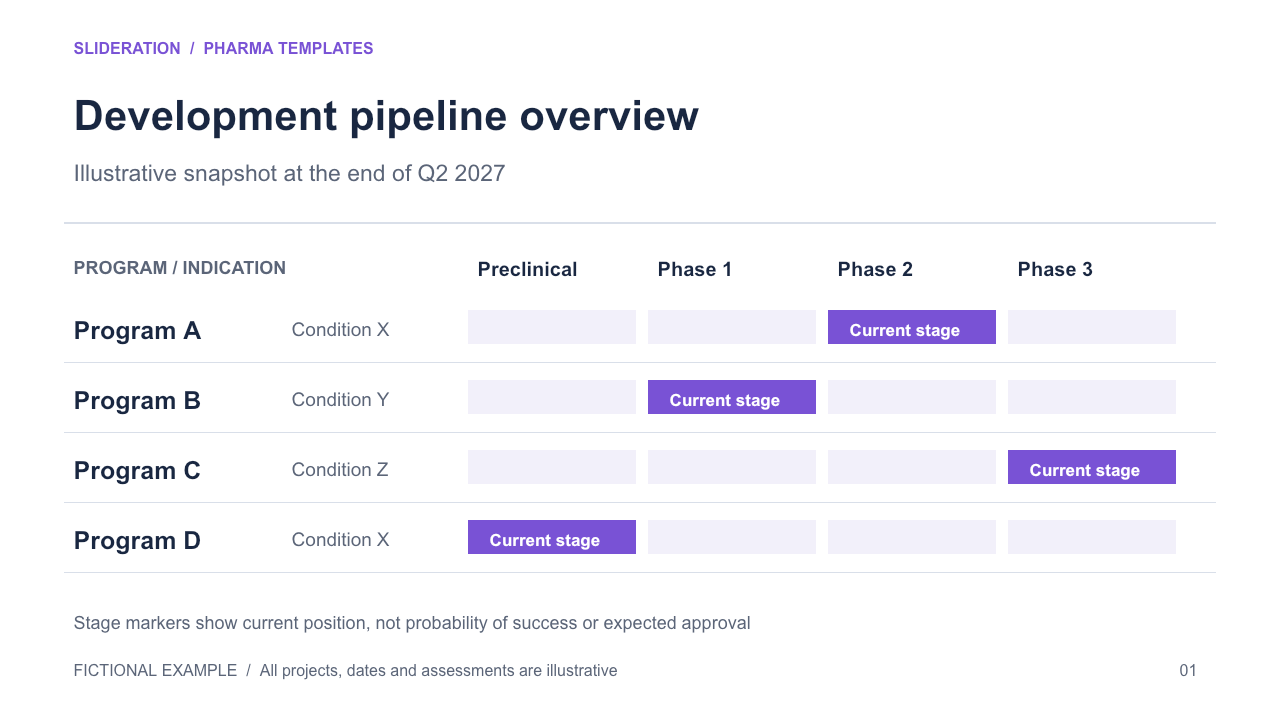
Development pipeline matrix with program and indication rows and movable current-stage markers
2 slides · Free PPTX
Check inputs & editing effort →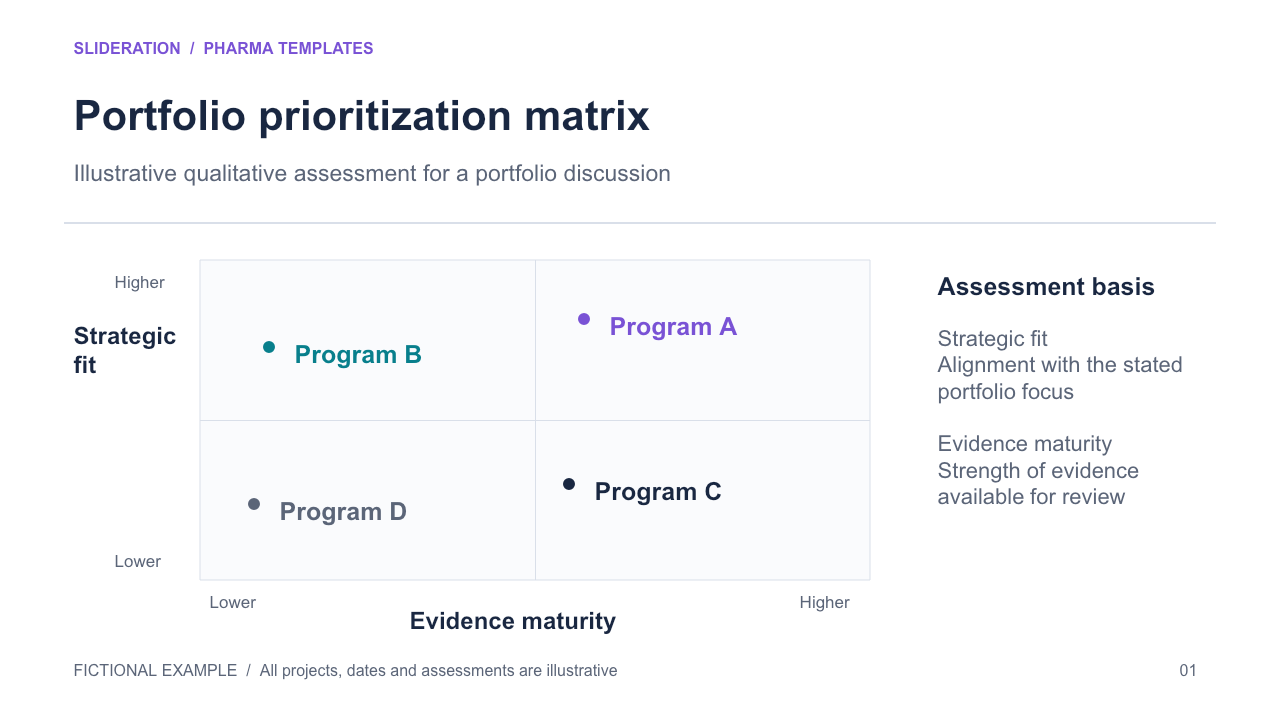
Qualitative portfolio matrix with strategic-fit and evidence-maturity axes and assessment definitions
2 slides · Free PPTX
Check inputs & editing effort →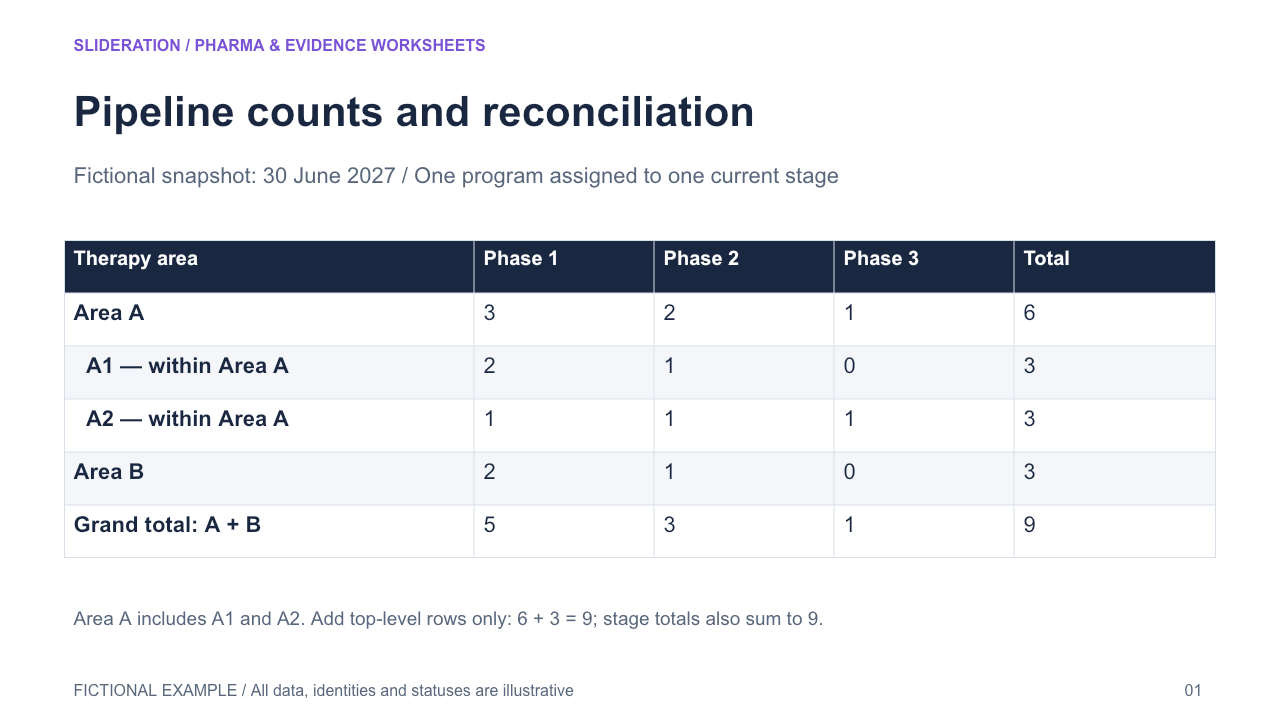
Pipeline counts and reconciliation — Therapy-area-by-stage counts have declared counting unit, indented child categories, row and column totals and an explicit reconciliation check. A subtotal is not added a second time.
2 slides · 1 credit
Check inputs & editing effort →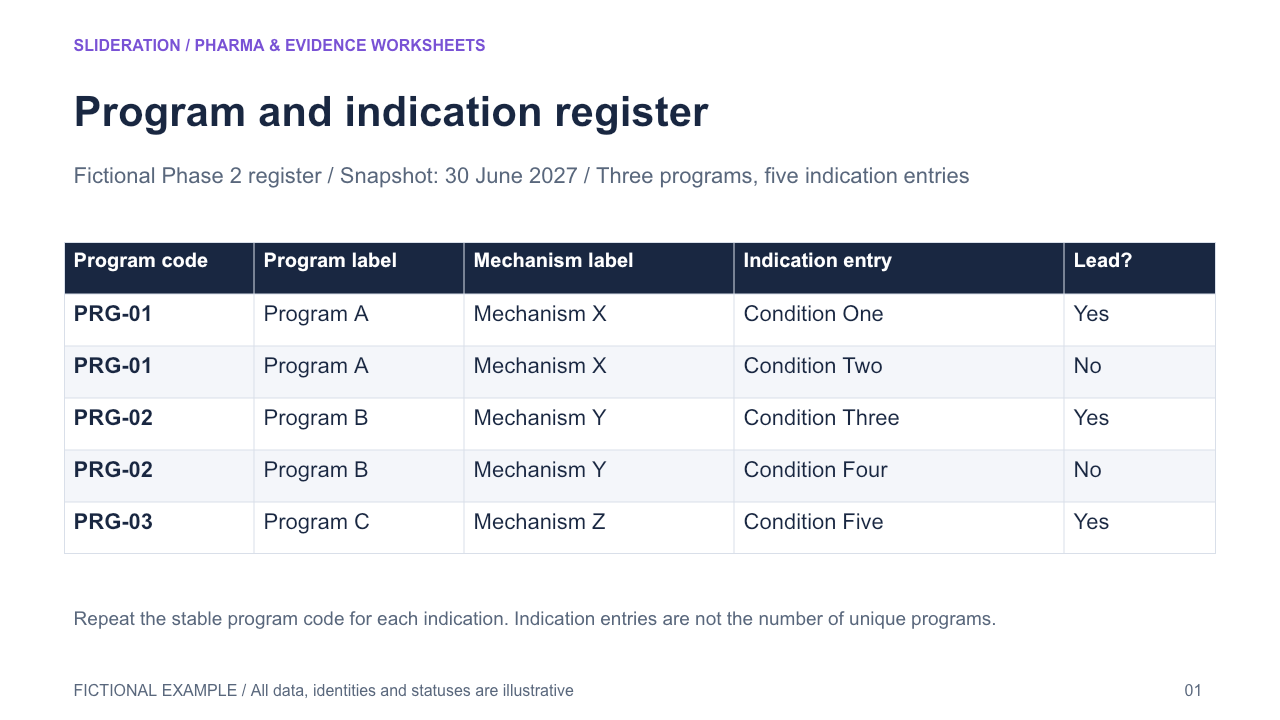
Program and indication register — Persistent fictional program code links mechanism to one or more indication rows within a declared stage snapshot. Distinguish unique program count from indication-entry count; leading indication is separately marked.
2 slides · 1 credit
Check inputs & editing effort →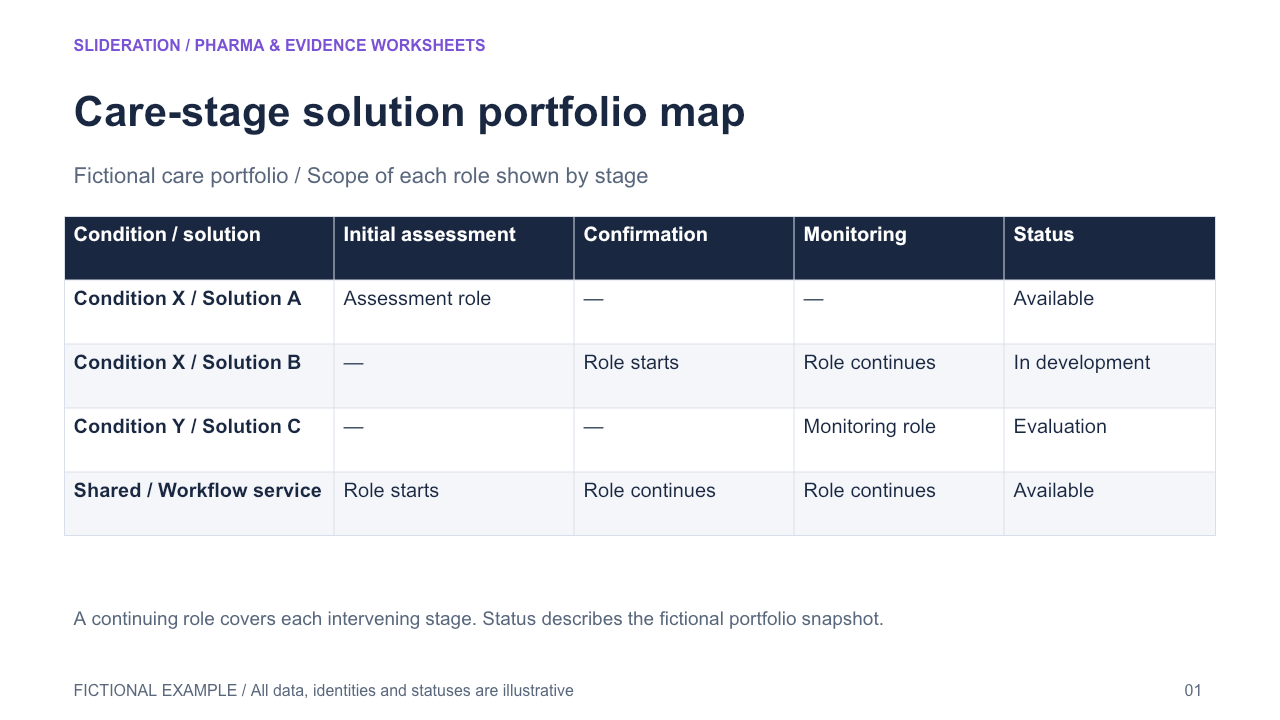
Care-stage solution portfolio map — Map solution items across condition rows and care-stage columns, distinguishing development status and cross-stage capabilities. An item may span adjacent stages while retaining one identity.
2 slides · 1 credit
Check inputs & editing effort →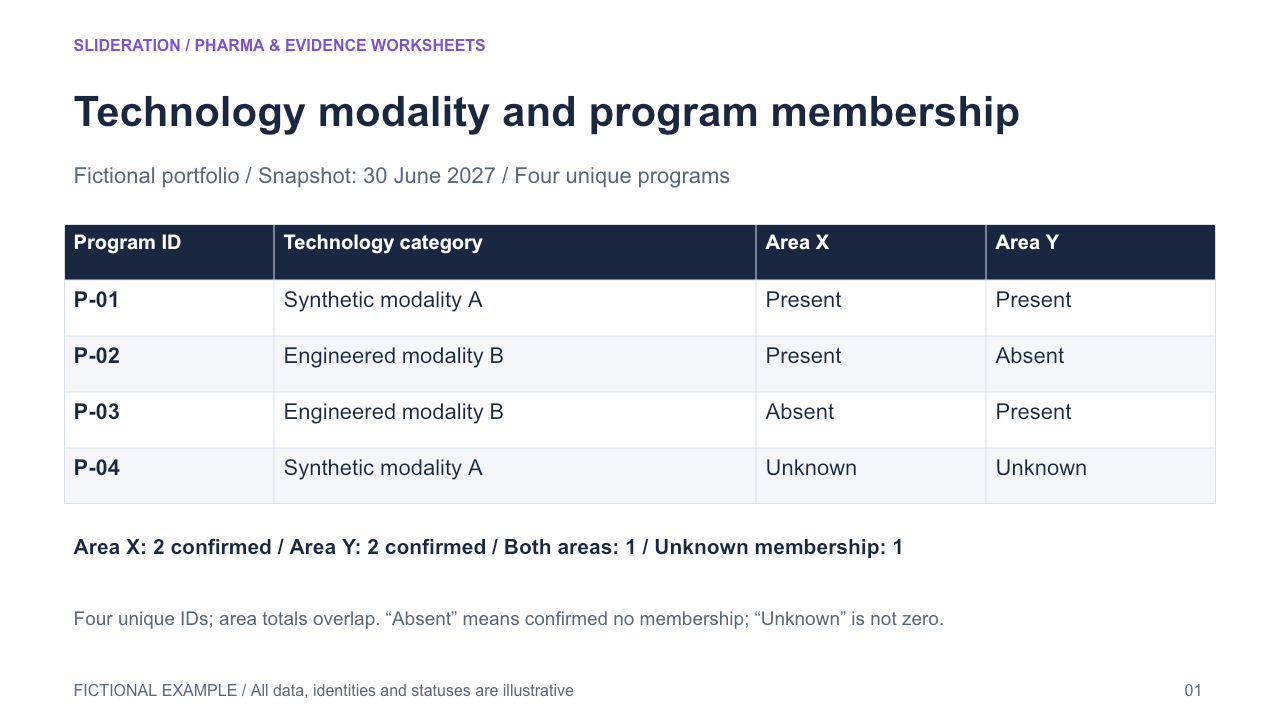
Technology modality and program membership — Use a common set of modality definitions and a program-to-area membership grid. A program may support multiple development areas and must be counted once across the portfolio. Existing capability grids present parallel categories, while the program register and pipeline organize examples by indication or stage.
2 slides · 1 credit
Check inputs & editing effort →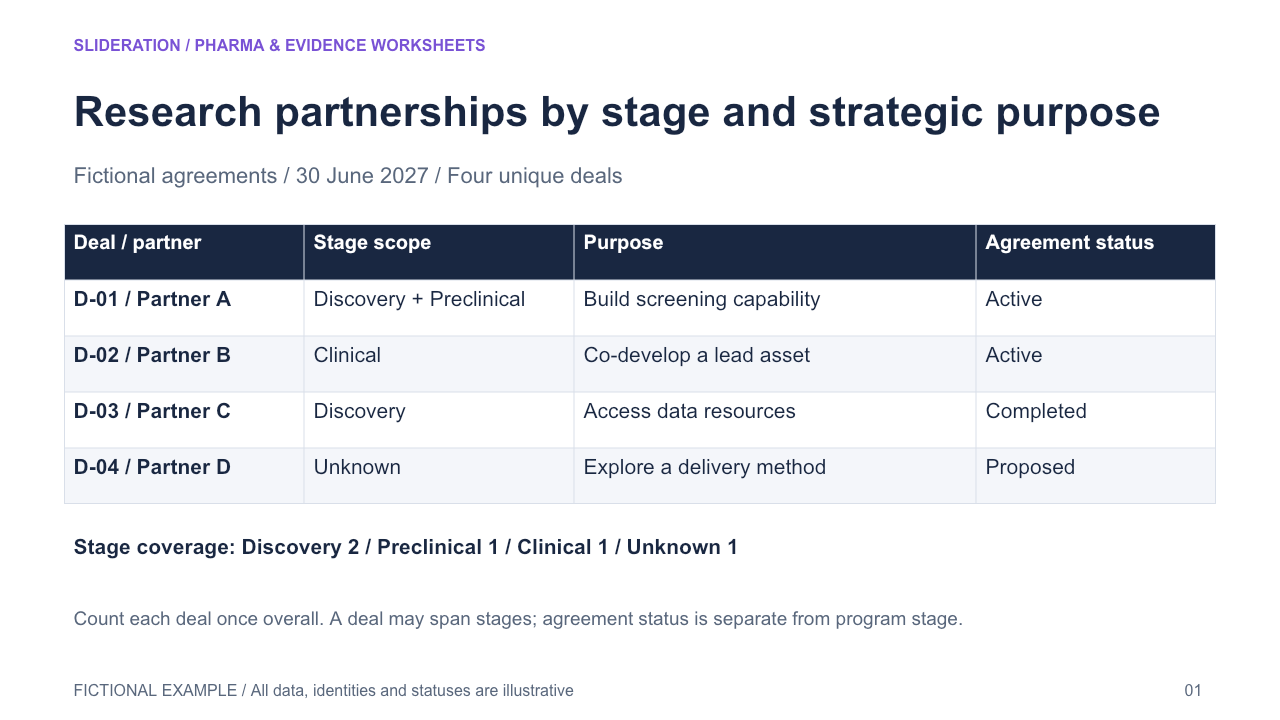
Research partnerships by stage and strategic purpose — Use one row per stable deal ID and retain both the development stages it covers and its strategic purpose. Existing partner tiles group examples without development-stage coverage, and the pipeline and program register track assets or indications rather than deal scopes.
2 slides · 1 credit
Check inputs & editing effort →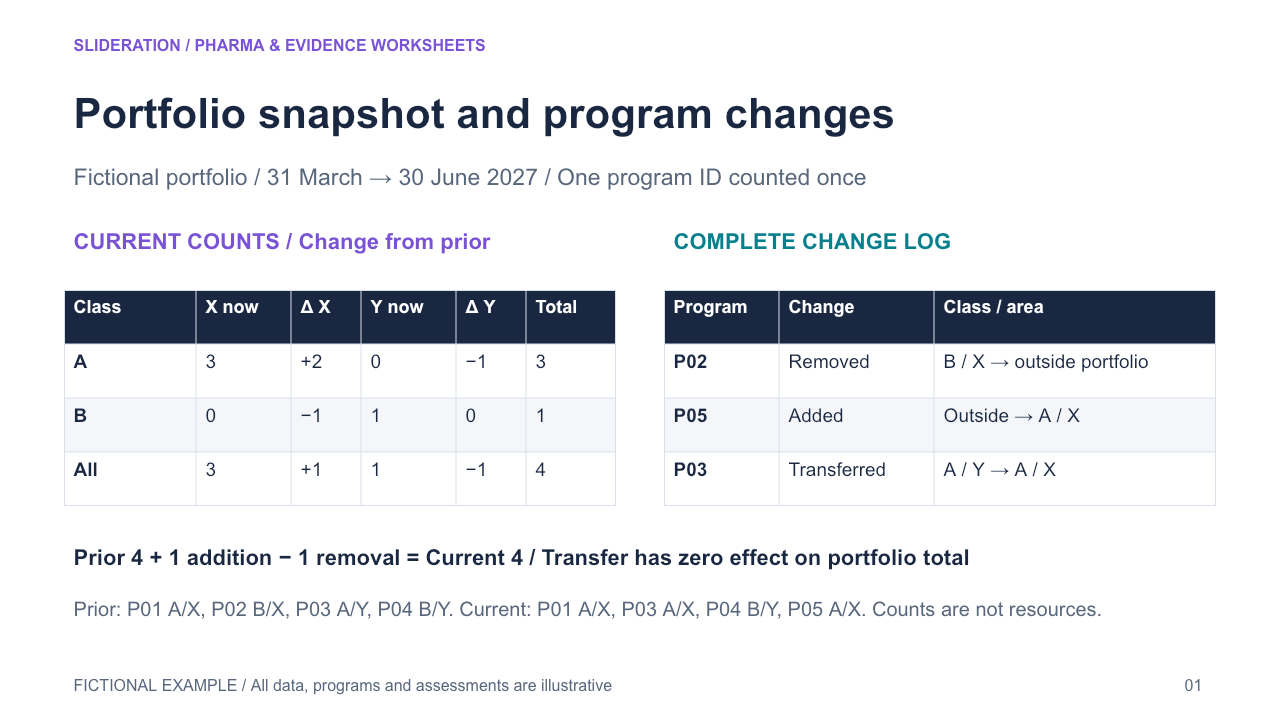
Portfolio snapshot and program changes — Reconcile a period-specific change log to current portfolio counts and net movements by program class and therapeutic area. Existing bridges reconcile one total, and existing composition charts do not connect class-by-area counts to program changes.
2 slides · 1 credit
Check inputs & editing effort →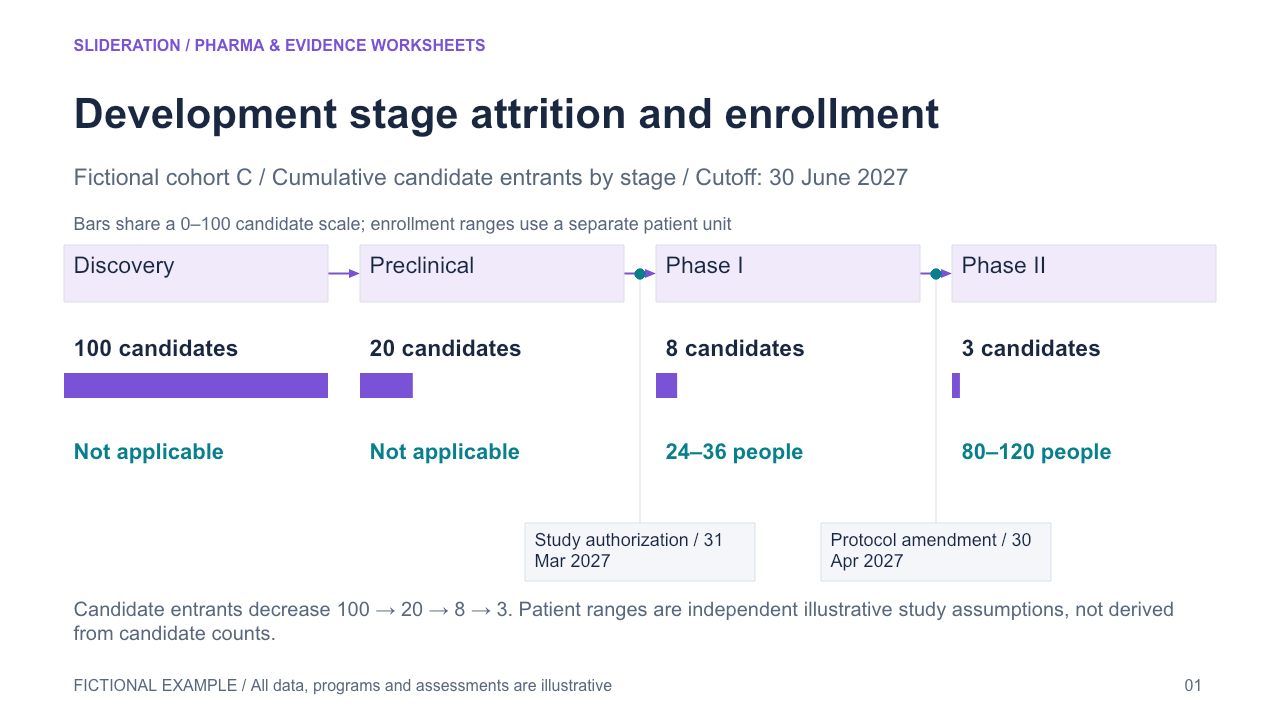
Development stage attrition and enrollment — Align candidate attrition and stage-specific enrollment on the same stage axis while separating their units and populations. Place regulatory checkpoints between the relevant stages. The existing roadmap, funnel and trial-cohort layouts cover these relationships separately.
2 slides · 1 credit
Check inputs & editing effort →